Disclosure: This guide contains affiliate links. If you purchase through our links, we may earn a small commission at no extra cost to you.
Do You Even Need One?
Honest answer: if you travel with just a phone, you don't — a travel eSIM covers you, and your phone's hotspot handles the occasional laptop session. A travel router starts earning its ~200 grams when:
You work on hotel WiFi
Log in once at check-in; every device auto-connects to your own private network all week.
You travel with 3+ devices
Laptop, tablet, two phones, a streaming stick — one router, one login, no per-device captive portals.
You want always-on VPN
A VPN client on the router encrypts every device's traffic automatically — including devices that can't run VPN apps.
You rent apartments
Plug into the rental's Ethernet or rebroadcast its WiFi with your own network name, password, and firewall.
The winning combo for working travelers is eSIM in the phone + router in the bag: cellular data when you're out, secured WiFi when you're in.
The 6 Best Travel Routers
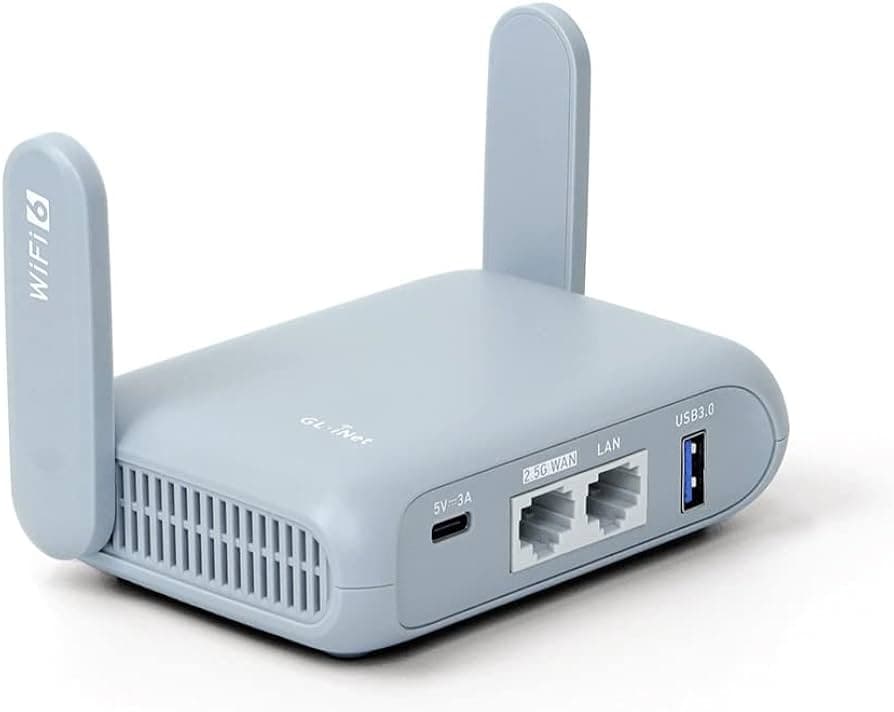
Best overall
Amazon
GL.iNet Beryl AX (GL-MT3000)
WiFi 6 speeds, 196 g, and WireGuard VPN at 300 Mbps — the speed/size/price sweet spot for most travelers.
WiFi
WiFi 6 (AX3000)
VPN
WireGuard 300 Mbps · OpenVPN 150 Mbps
Weight
196 g
Power
USB-C (5V/3A — any phone charger)
If you buy one travel router, buy this one. The Beryl AX handles a full hotel-room setup — laptop, tablet, two phones, a Chromecast — without breaking a sweat, and its WireGuard throughput is fast enough that you'll forget the VPN is on. It runs OpenWrt under the hood, but the web interface makes repeating hotel logins and VPN setup genuinely easy.
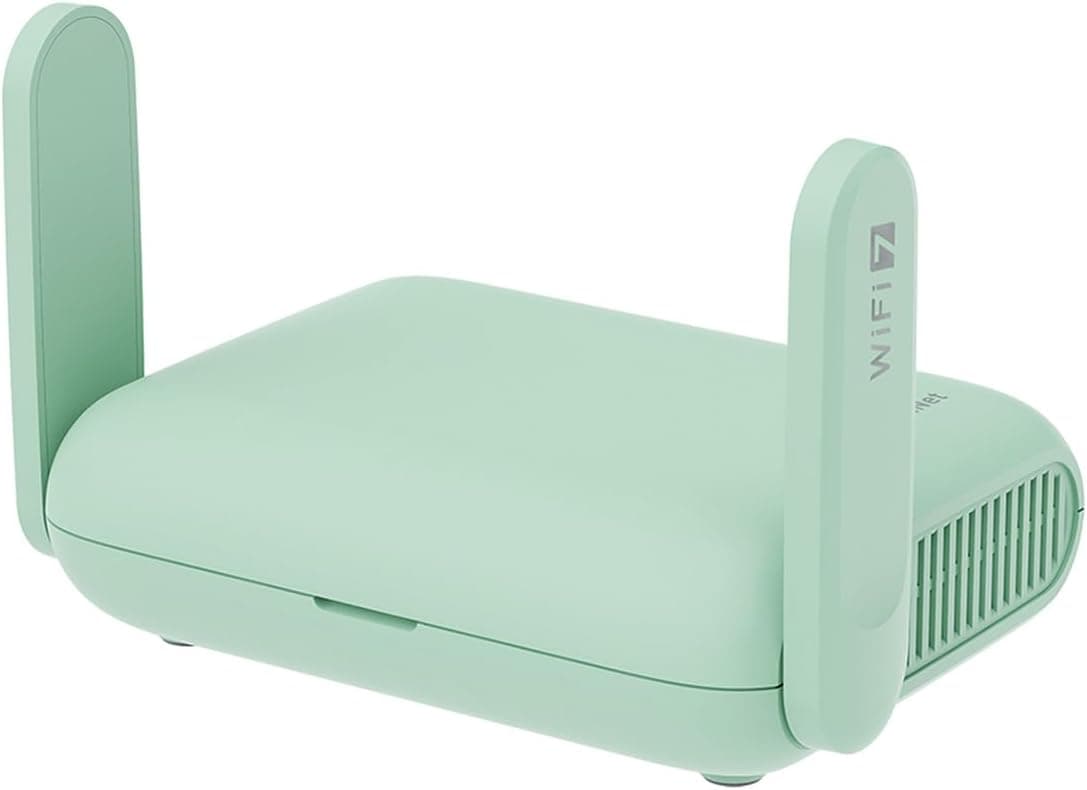
Fastest VPN
Amazon
GL.iNet Beryl 7 (GL-MT3600BE)
Launched Feb 2026 — WiFi 7 and up to 1,100 Mbps through WireGuard. The pick if everything you do runs through a VPN.
WiFi
WiFi 7 (BE3600)
VPN
WireGuard up to 1,100 Mbps · OpenVPN-DCO 1,000 Mbps
Weight
205 g
Power
USB-C PD
The newest router here, and the one to get if VPN speed is the whole point. Its WireGuard throughput is roughly 3–4x the Beryl AX — enough that even gigabit hotel or rental-apartment connections stay fast with encryption on. Only ~10 g heavier than the Beryl AX.
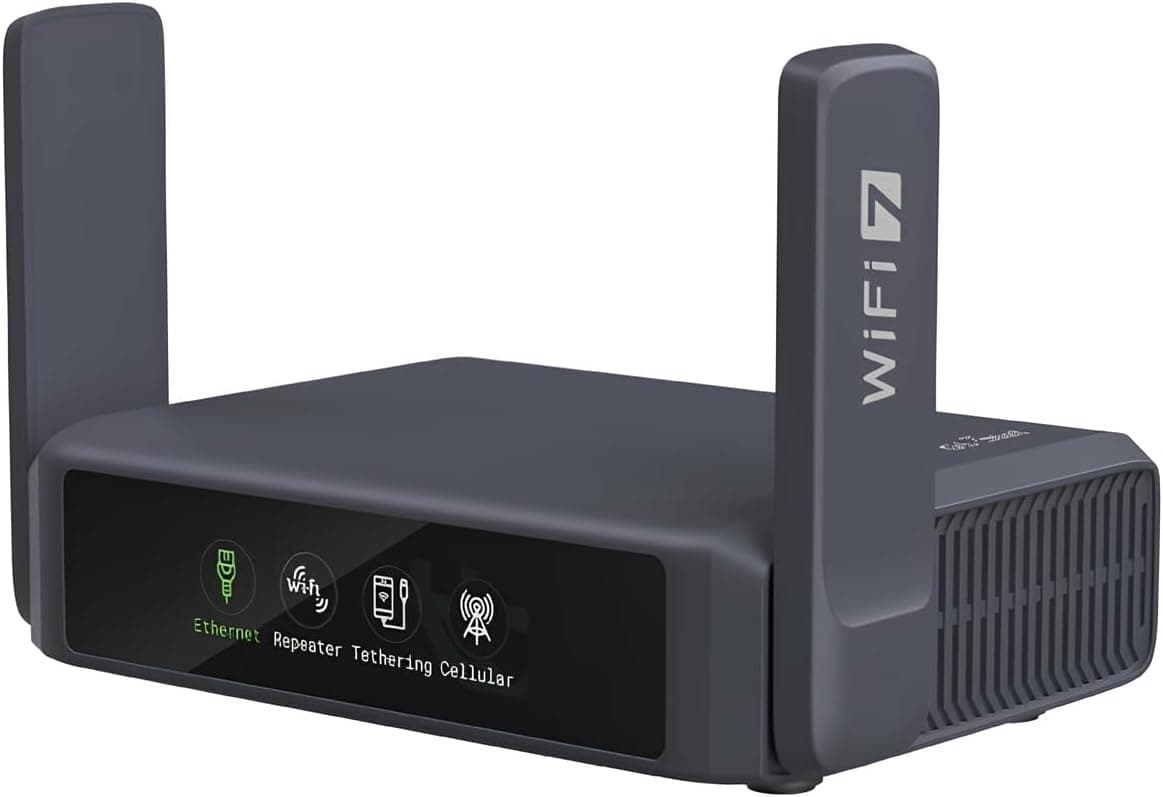
Premium pick
Amazon
GL.iNet Slate 7 (GL-BE3600)
WiFi 7, dual 2.5G Ethernet ports, and a touchscreen for on-device setup — the power-user option.
WiFi
WiFi 7 (BE3600)
VPN
WireGuard + OpenVPN preinstalled
Weight
295 g
Power
USB-C PD
The Slate 7 is for travelers who colonize their hotel room: dual 2.5-gigabit Ethernet for wired setups, a small touchscreen so you can join hotel WiFi without opening a laptop, and the same WiFi 7 radio as the Beryl 7. It's the heaviest non-cellular pick here — worth it only if you'll use the ports.
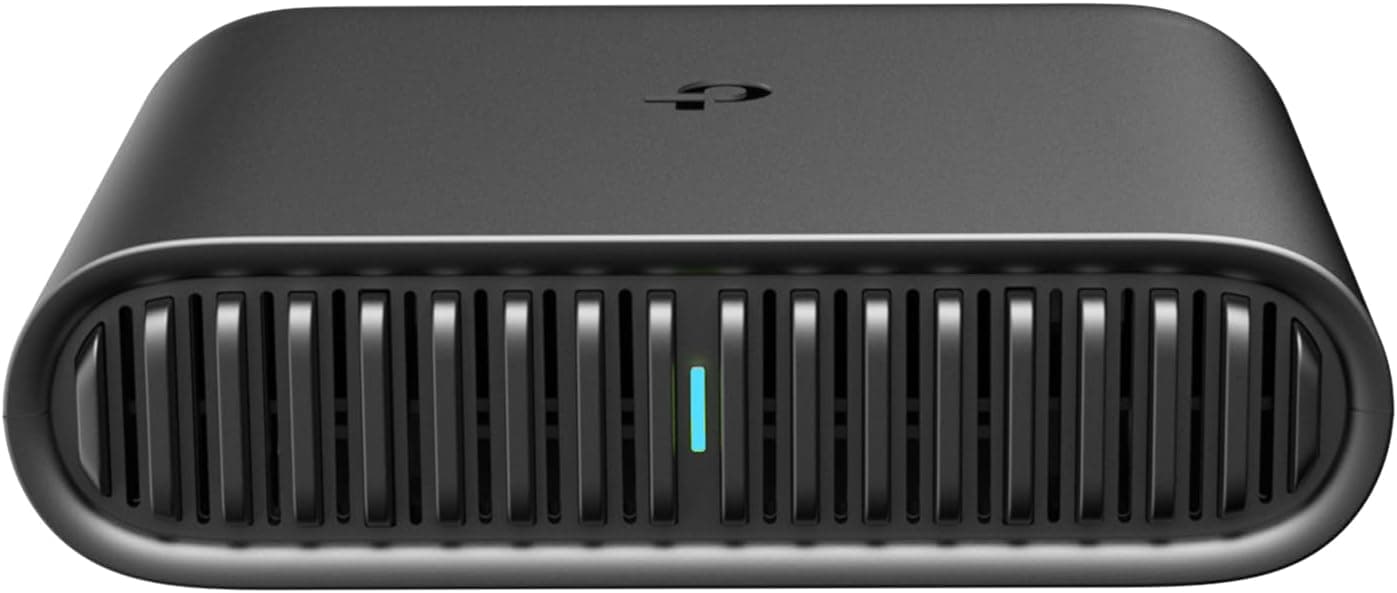
Easiest setup
Amazon
TP-Link Roam 6 (TL-WR1502X)
WiFi 6 with WireGuard and OpenVPN in TP-Link's familiar Tether app — no OpenWrt learning curve.
WiFi
WiFi 6 (AX1500)
VPN
WireGuard + OpenVPN (client & server)
Weight
Palm-sized (104 × 90 × 28 mm)
Power
USB-C PD/QC
If GL.iNet's tinkerer-friendly interface sounds like a chore, the Roam 6 delivers the core travel-router experience — hotel WiFi sharing, VPN client, multiple modes — through the same Tether app millions of people already use for their home router. Solid WiFi 6 speeds at a mainstream price.
Budget pick
Amazon
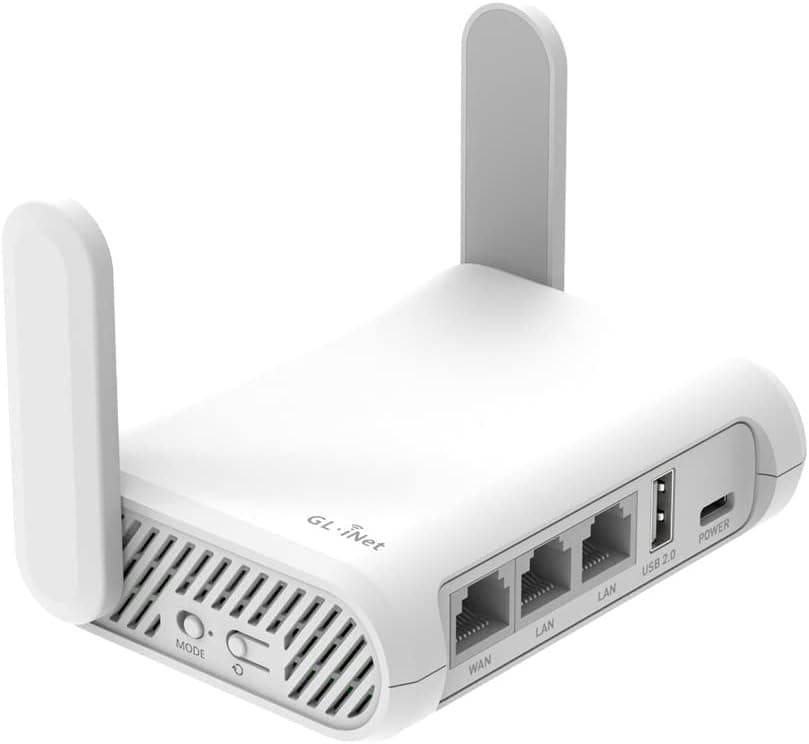
GL.iNet Opal (GL-SFT1200)
Under $40 and 145 g. WiFi 5 and modest VPN speeds, but it does the one job most people need: one login, private network.
WiFi
WiFi 5 (AC1200)
VPN
WireGuard 65 Mbps · OpenVPN 12 Mbps
Weight
145 g
Power
USB-C (5V/3A)
The Opal's VPN throughput won't win benchmarks, but 65 Mbps through WireGuard is more than most hotel WiFi delivers anyway. For a casual traveler who wants captive-portal convenience and basic security on a budget, this is the easy answer — and it's light enough to forget it's in your bag.
Cellular pick
Amazon
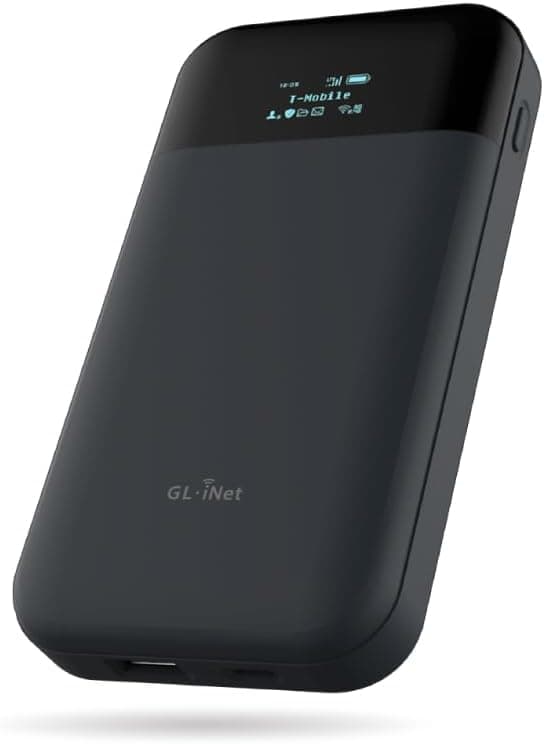
GL.iNet Mudi V2 (GL-E750V2)
The only pick with its own cellular modem — nano-SIM slot, 4G LTE, and a 7,000 mAh battery that runs ~8 hours untethered.
WiFi
WiFi 5 + 4G LTE Cat 6 (300/50 Mbps)
VPN
WireGuard 40 Mbps · OpenVPN 5 Mbps
Weight
285 g
Power
Built-in 7,000 mAh battery, USB-C charging
The Mudi V2 is a different animal: drop in a local SIM card and it's a standalone hotspot with a battery — no hotel WiFi required. Note the SIM slot takes physical SIMs (or physical eSIM cards), not downloadable eSIM profiles, so the common setup is an eSIM in your phone plus a cheap local data SIM in the Mudi for the laptop bag.
Side-by-Side
| Router | WiFi | Best VPN speed | Weight | Price |
|---|---|---|---|---|
| Beryl AX | WiFi 6 | 300 Mbps | 196 g | ~$90 |
| Beryl 7 | WiFi 7 | 1,100 Mbps | 205 g | ~$130 |
| Slate 7 | WiFi 7 | ~900 Mbps | 295 g | ~$149 |
| Roam 6 | WiFi 6 | WireGuard (unrated) | Palm-sized | ~$60 |
| Opal | WiFi 5 | 65 Mbps | 145 g | ~$35 |
| Mudi V2 | WiFi 5 + 4G | 40 Mbps | 285 g | ~$140+ |
Prices are approximate street prices at publication — check the listing for current pricing.
The Real Reason to Carry One: Hotel WiFi Security
Speed is nice, but the strongest case for a travel router is what it does to shared networks. Hotel, hostel, and café WiFi put you on a network with strangers; the router puts a firewall between them and every device you own. Add a VPN client on the router — every GL.iNet and TP-Link pick here supports WireGuard — and all your traffic is encrypted before it ever touches the hotel network, from your laptop down to a streaming stick that can't run a VPN app on its own.
Set the VPN up at home before you fly, exactly like your eSIM — the same "test it before you need it" rule from our eSIM setup guide applies.
Router for the room, eSIM for the road
Compare prepaid eSIM plans for 60+ countries and land with data the moment you touch down.
Compare eSIM Plans