Disclosure: This guide contains affiliate links. If you purchase through our links, we may earn a small commission at no extra cost to you.
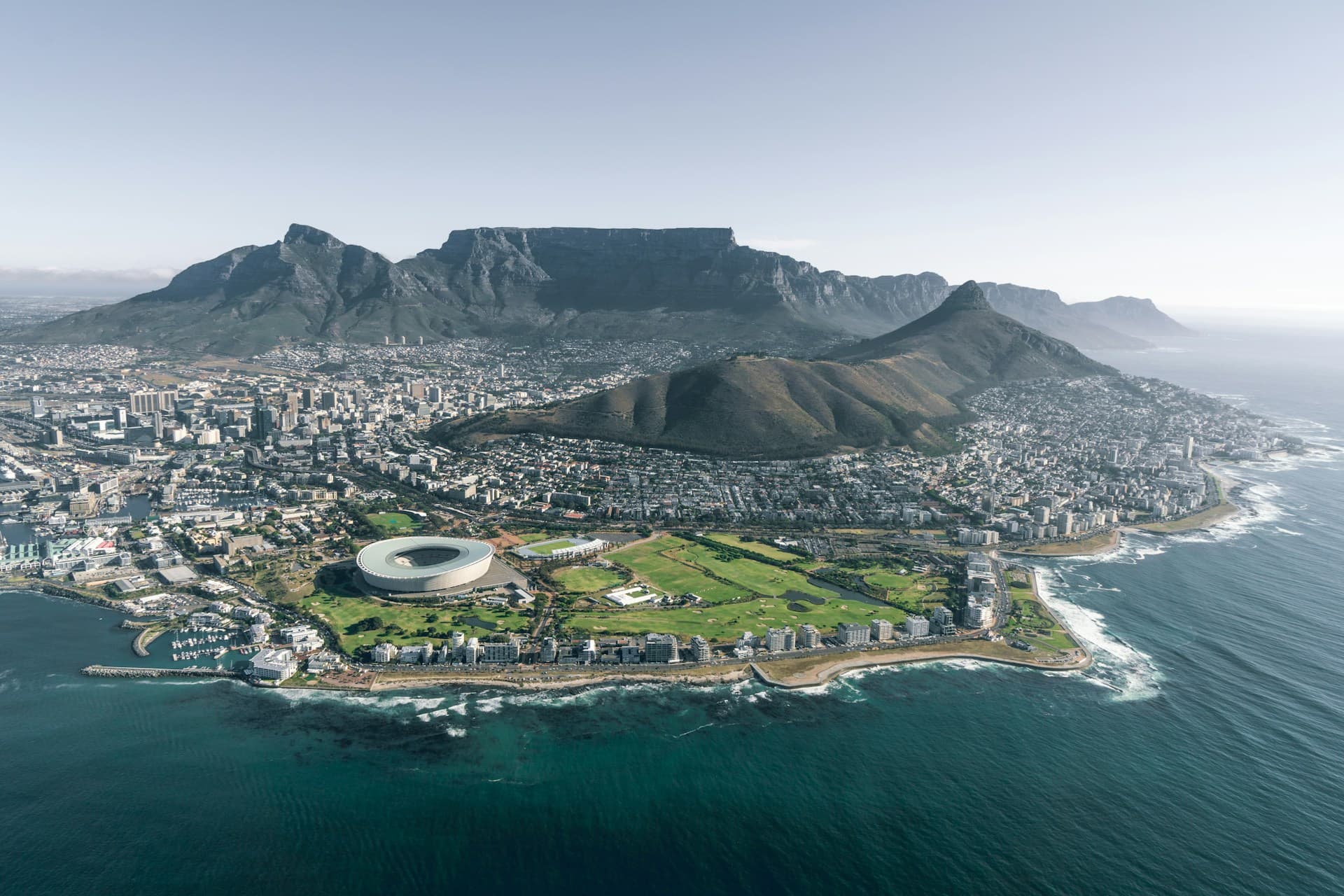
Cape Town is the rare city where the geography is the main attraction. Table Mountain rises 1,086 metres straight out of the city centre. The Cape Peninsula stretches 75 kilometres south into the Atlantic, where penguins live on the beach and baboons cross the road. Forty minutes inland, the Cape Winelands sit in a ring of 300-year-old estates between granite mountains.
What makes Cape Town unusual as a destination is the density of completely different experiences within a 90-minute drive of one base. A morning on Table Mountain, an afternoon at a Stellenbosch wine estate, a sunset on Camps Bay beach — that itinerary is normal here. The compactness, combined with a favourable currency for most international visitors, makes it one of the highest-value cities on the planet right now.
Below are 15 unmissable things to do in Cape Town, plus the day trips worth the extra time, the practical information you need to navigate safely, and how to handle the two quirks every visitor encounters: load shedding and the difference between safe areas and the areas the news headlines describe.
1. Table Mountain
The flat-topped sandstone summit visible from almost every point in the city is one of the New 7 Wonders of Nature (recognised in 2011) and the single thing every Cape Town trip is built around. The top is a 3-kilometre plateau covered in fynbos — the floral kingdom unique to the Western Cape — with views across the City Bowl, Robben Island, the Atlantic, and the entire Cape Peninsula.
How to get up:
- Aerial Cableway: the rotating cable car covers the 704-metre vertical in about 5 minutes. Around R460 round-trip for adults in 2026 (~$25). Book online — the ticket booth queues at the lower station can be 90 minutes in peak season, while online tickets walk straight to boarding.
- Platteklip Gorge: the classic walk-up route. 2.5 hours up, steep and unrelenting, with minimal shade. Start early (before 8 AM) in summer to avoid sun exposure.
- India Venster: a more scenic ridge route that involves some easy scrambling and chained sections. Not for anyone with vertigo.
- Skeleton Gorge: a longer, lusher hike up the eastern side from Kirstenbosch Botanical Garden. Combines two of the city's best experiences.
Critical:The cableway closes for high wind — and the Cape Doctor (the summer south-easter) can shut it for days at a time. Always check the cableway's live status before travelling out, and treat Table Mountain as a first-clear-morning priority on your itinerary rather than a fixed day. Sunset trips are extraordinary, but check the last cable-down time before walking the plateau.
2. The V&A Waterfront
The Victoria & Alfred Waterfront — named for Queen Victoria and her son, not her husband — is a working harbour and the most-visited destination in Africa, with around 25 million visitors per year. It anchors Cape Town tourism: hotels, restaurants, the aquarium, the ferry terminal to Robben Island, the Zeitz Museum of Contemporary African Art, and the boardwalk where most first-night dinners happen.
What to actually do here:
- Zeitz MOCAA — the largest museum of contemporary art from Africa anywhere, housed in the converted 1921 grain silo. The atrium, carved by Thomas Heatherwick, is worth the visit alone. Around R250 entry.
- The V&A Food Market and Watershed: covered markets with local artisans, prepared food stalls, and good souvenirs that aren't the airport-stall kind.
- The Cape Wheel: a 40-metre observation wheel with reasonable Atlantic views. Around R200 per adult. Skippable if you've already done Table Mountain.
- The Two Oceans Aquarium — covered in detail below, but it's based on the harbour.
- Sunset cocktails at Belmond Mount Nelson, the Silo Hotel rooftop, or one of the working boats serving food on the dock.
Tip:The V&A is the only part of central Cape Town where walking between attractions at night is genuinely fine. Many visitors base themselves at a Waterfront hotel for the first 1–2 nights specifically for that ease, then move to Camps Bay or the City Bowl for the rest of the trip.
3. Robben Island
The island prison 7 kilometres off the coast where Nelson Mandela served 18 of his 27 years in custody, along with Walter Sisulu, Ahmed Kathrada, Govan Mbeki, and other ANC leaders. The island has been a leper colony, a defensive base, and finally a maximum-security political prison under apartheid. It became a UNESCO World Heritage Site in 1999 and is now a museum operated by the South African government.
What the tour includes:
- A 30-minute ferry crossing from the V&A Waterfront's Nelson Mandela Gateway.
- A bus tour of the island: the lime quarry where Mandela and other prisoners broke rocks, the leper graveyard, the small village, and Sobukwe House (where Pan-Africanist Congress founder Robert Sobukwe was held in solitary).
- A guided tour of the maximum-security prison led by a former political prisoner — the single most powerful part of the experience. You'll see Mandela's actual cell (number 5, B-section), which is approximately 2.4 by 2.1 metres.
- Return ferry. Total round-trip is about 3.5 hours.
Critical: Tickets sell out — book online via the official Robben Island Museum site at least 2–3 weeks ahead in peak season (December–February). Tickets are around R600 for adults. Tours run weather-dependent and the ferry crossing can be cancelled in high winds; build a buffer day into your itinerary so you can rebook if the first attempt is cancelled. Bring a jacket even in summer — the wind on the boat and the island is serious.
4. The Cape Peninsula & Cape Point
The 75-kilometre drive south from Cape Town to Cape Point — and back up the Atlantic side via Chapman's Peak — is one of the great coastal drives anywhere in the world. Cape Point itself is the south-western tip of Africa (though, contrary to popular belief, not the meeting point of the Atlantic and Indian oceans — that's Cape Agulhas, 150 kilometres east). Two oceans do meet roughly here, but the line shifts seasonally.
Highlights of the drive:
- Chapman's Peak Drive: a 9-kilometre cliffside route from Hout Bay to Noordhoek, carved into the rock face. Around R63 toll. Closed periodically for rockfall — check status before driving.
- Cape Point Lighthouse: a short funicular ride (the Flying Dutchman) or a 20-minute uphill walk gets you to the historic 1860 lighthouse, with viewpoints over the cliffs.
- Cape of Good Hope: the famous signposted point, 3 kilometres west of the lighthouse. The classic photo spot.
- Boulders Penguin Beach (see #5): the must-stop on the return trip up the False Bay side.
- Baboons: troops live wild along the peninsula. Keep car windows up. Never feed them.
Tip:Hire a car or book an organised peninsula tour — public transport doesn't work for this. A self-drive day is about R150 in fuel plus the R400 Cape Point reserve entry. Tours run R900–R1,500 per person and include the driver, history commentary, and usually a lunch stop at Simon's Town or Hout Bay. The peninsula day is the single best full-day itinerary in Cape Town if you only do one organised tour.
5. Boulders Penguin Beach
A protected colony of around 3,000 African penguins lives on Boulders Beach near Simon's Town, on the False Bay side of the peninsula. The colony has been there since 1982 — a pair of penguins arrived from offshore islands and the colony grew. It's now a part of Table Mountain National Park and one of the only places on earth where you can stand metres from wild penguins.
There are two ways to see them. The main boardwalk viewing area (Foxy Beach) is the easy, accessible option — wooden walkways look down on the breeding colony from a few metres away. Bay Beach next door allows you to swim with penguins waddling around the granite boulders. Boulders Beach itself is the most photogenic spot, with penguins among the giant granite boulders the beach is named for.
Tip: Entry is around R190 for international adults. Go early morning (8–9 AM) or late afternoon (after 4 PM) to avoid the day-tour buses. Do not touch or feed the penguins — they bite hard and the colony is fragile. The whole stop takes 45–60 minutes and fits naturally on the return leg of the Cape Peninsula drive.
6. Bo-Kaap
The famously colourful neighbourhood on the slopes of Signal Hill, west of the City Bowl. Bo-Kaap is the historic home of the Cape Malay community — descendants of enslaved people brought from the Dutch East Indies, Madagascar, and Mozambique during the 17th–19th centuries — and one of the oldest residential neighbourhoods in Cape Town, with cobbled streets dating to the 1760s.
The painted houses are recent in the long view — most were repainted in vivid colours after 1994, as the community celebrated freedom from apartheid restrictions that had limited what residents could do with their properties. The Bo-Kaap Museum on Wale Street tells the neighbourhood's history with strong exhibitions on the Cape Malay community, Islam in South Africa, and the resistance movements that emerged here.
What to do here:
- Walk Wale Street, Chiappini Street, and Rose Street for the classic painted-house photos. Be respectful — these are people's homes, not a film set.
- Visit the Bo-Kaap Museum (around R60). Small but well-curated.
- Eat at Biesmiellah, Bo-Kaap Kombuis, or Atlas Trading on Wale Street for Cape Malay food — bobotie, denningvleis, samosas, koeksisters.
- Take a cooking class with a local resident — Andulela Tours runs one of the longest-running and most reviewed Cape Malay cooking experiences.
- The Auwal Mosque on Dorp Street (1794) is the oldest mosque in South Africa.
Tip:Bo-Kaap is a 10-minute walk from the V&A Waterfront or the City Bowl and easily combines with a Long Street and Greenmarket Square walking morning. Cooking classes book up 1–2 weeks ahead.
7. Kirstenbosch National Botanical Garden
Founded in 1913, Kirstenbosch is one of the great botanical gardens in the world and the first to be dedicated to a country's indigenous flora. The 528 hectares sit on the eastern slopes of Table Mountain and showcase the Cape Floristic Region — one of only six floral kingdoms on the planet, more biologically diverse than the entire Amazon basin per square metre.
What to see:
- The Centenary Tree Canopy Walkway ('Boomslang'): a curving 130-metre steel walkway through the tree canopy, opened in 2014. The signature view.
- The Protea Garden: South Africa's national flower in its native setting.
- The Cycad Amphitheatre: living specimens of plants that pre-date dinosaurs.
- The Sculpture Garden featuring works from Zimbabwean Shona artists.
- The Summer Sunset Concerts: outdoor concerts on Sunday evenings from late November to early April. Local bands, international acts, picnic blankets on the lawn. One of the loveliest things you can do in Cape Town.
Tip:Entry is around R230 for international adults. Allow 2–3 hours minimum. The Tea Room serves a strong breakfast and lunch — easily worth structuring half a day around. If you're visiting in summer, check the concert schedule before you book any other Sunday evening plans.
8. Lion's Head
The 669-metre peak west of Table Mountain, named for its resemblance to a reclining lion (the city is on the body — Signal Hill is the rump, Lion's Head is the head). The 5-kilometre summit hike is the most-walked trail in Cape Town and a popular sunrise and sunset outing.
The walk is about 75–90 minutes up at a moderate pace. The lower two-thirds is a spiral path around the cone; the final third involves chained sections, ladders, and some scrambling that catches first-time hikers off guard. The summit gives you 360° views over the City Bowl, the Atlantic Seaboard, Table Mountain, and Robben Island.
Tip:Full-moon hikes are a Cape Town tradition — locals walk up at dusk on full-moon nights and watch the moonrise from the summit. Take a head torch, warm layers, and don't go alone after dark. The trailhead parking on Kloof Nek Road has had occasional opportunistic crime; use Uber/Bolt to drop and collect rather than leaving a car. There is no entry fee.
9. Camps Bay & the Atlantic Seaboard
Camps Bay is the photogenic strip of Atlantic coast on the western side of Table Mountain, framed by the Twelve Apostles range and a stretch of white-sand beach. It's the closest Cape Town comes to Côte d'Azur or Bondi — palm-lined Victoria Road fronted by restaurants, with Clifton's four pocket beaches just to the south and Bakoven's rock pools to the north.
The water is cold year-round (15–20°C — the Benguela Current keeps the Atlantic side cool), but the beach itself is beautiful, the sunsets are extraordinary, and the sundowner culture along Victoria Road is one of the more enjoyable things Cape Town does. The Bay Hotel, Café Caprice, The Twelve Apostles, and the Roundhouse all serve the sunset crowd.
Tip:Park in the side streets rather than along Victoria Road if you're self-driving — the main strip fills early. For the photograph, walk south of Camps Bay onto Glen Beach for the unobstructed Twelve Apostles view. Clifton 2nd and 4th beaches are the most swimmable (slightly sheltered) but get very busy in peak season.
10. The Cape Winelands — Stellenbosch & Franschhoek
South Africa's 350-year-old wine industry — the oldest in the New World — is centred 45 minutes east of Cape Town in a string of valleys between granite mountains. Three regions dominate visits: Stellenbosch (the historic university town and largest wine area), Franschhoek (founded by French Huguenots in 1688 and still the most polished gastronomic town in South Africa), and Paarl (the largest by area, less polished than the other two but home to some serious producers).
A short list of estates worth the visit:
- Babylonstoren (Simondium): the destination estate of the past decade. Working farm, formal gardens designed by a French landscape architect, restaurant, deli, and one of the best small-luxury hotels in the region. Day visitors are welcome.
- Boschendal (Franschhoek Valley): one of the original Cape Dutch estates. Long Sunday lunches in the gardens, picnic baskets, working winery and orchards. Family-friendly.
- Delaire Graff (Stellenbosch): perched at the top of Helshoogte Pass, the views over the valleys are extraordinary. Polished restaurant, top-end wines.
- Tokara (Stellenbosch): art gallery, restaurant, olive oil tastings, modern architecture. A different mood from the historic estates.
- Spier (Stellenbosch): one of the oldest farms in the country (1692). Picnic packages on the lawns, eagle encounters at Eagle Encounters wildlife sanctuary on-site.
- Franschhoek Wine Tram: hop-on-hop-off tram looping the Franschhoek Valley estates. The easiest way to do multiple tastings without a designated driver.
Tip:Don't drive yourself if you want to taste. Book a driver (around R1,800–R2,500 for a full day) or take the Franschhoek Wine Tram. Most estates charge R80–R150 for a tasting flight of 4–6 wines, often waived if you buy a bottle. Restaurant lunch reservations at the top-tier estates (Babylonstoren's Babel, Boschendal's Werf, La Petite Colombe in Franschhoek) need 2–4 weeks ahead in season.
11. District Six Museum
In 1966, the apartheid government declared District Six — a multi-racial inner-city neighbourhood of around 60,000 residents — a whites-only area. Over the following years 60,000 people were forcibly removed, their homes bulldozed, and the community scattered to the Cape Flats townships. The District Six Museum, housed in a former Methodist church on Buitenkant Street, tells that story through photographs, street signs, personal testimony, and a hand-painted floor map of the old neighbourhood streets — annotated by former residents with the locations of their houses, schools, and shops.
Tip:Entry is around R60. Allow 90 minutes. If you can, take the docent-led tour — many of the museum's guides are former District Six residents and the personal context they add is the experience. Combines well with Bo-Kaap and the Slave Lodge / Iziko South African Museum for a full half-day of historical orientation.
12. Two Oceans Aquarium
Based at the V&A Waterfront, the Two Oceans Aquarium showcases the marine ecosystems where the Atlantic and Indian oceans meet around the southern African coast. The standout tanks: the Predator Exhibit (ragged-tooth sharks, turtles, and large game fish in a 2-million-litre tank), the I&J Ocean Exhibit (a wraparound tunnel where loggerhead and green turtles swim overhead), and the Kelp Forest (a recreation of the cold-water kelp forests that line the Atlantic coast).
Tip:Entry is around R260 for international adults. Particularly good with kids. Allow 2 hours. Combines easily with anything else at the V&A — the aquarium sits next to the food market and the ferry terminal for Robben Island.
13. Long Street & Bree Street
The two parallel streets that anchor Cape Town's City Bowl nightlife and independent shopping. Long Street is the old backpacker spine — Victorian wrought-iron balconies, second-hand bookshops (Clarke's Bookshop is the institution), African craft markets in the Pan-African Market building, and the bar strip that's been Cape Town's after-dark centre for decades. Bree Street, one block west, has quietly become the cocktail-bar-and-bistro spine — lower-key, more polished, and home to some of the best restaurants in the city.
Worth the walk:
- Greenmarket Square (just off Long Street): a cobblestoned square that's been a market since the 1700s. Touristy in the best way — African crafts, masks, carvings.
- The Pan-African Market: four floors of African art and craft in a converted Long Street building.
- Clarke's Bookshop: arguably the best Africa-focused bookshop in the world.
- Bree Street restaurants: Chefs Warehouse, Mulberry & Prince, Salsify, Culture Club Cheese — collectively, the densest cluster of good food in the City Bowl.
- Honest Chocolate Café — small-batch local chocolate on Wale Street, around the corner.
Tip: Walk Long Street during the day, take Uber/Bolt after dark. Bree Street is generally fine to walk between restaurants in the early evening, but again, switch to a ride home. Saturday afternoons at Greenmarket Square are the most lively window for the markets.
14. The Constantia Wine Route
The often-overlooked alternative to Stellenbosch — and actually the original Cape wine region. Groot Constantia, founded in 1685 by then-governor Simon van der Stel, is South Africa's oldest wine estate. The historic manor house is a museum in its own right, and Napoleon ordered Vin de Constance dessert wine shipped to St Helena during his exile.
The whole Constantia valley sits inside the Cape Town city limits — 15 minutes from the centre — and is the easy half-day Winelands experience for visitors who don't want to commit a full day to Stellenbosch or Franschhoek. Key estates: Groot Constantia, Klein Constantia (the modern Vin de Constance maker), Buitenverwachting, Beau Constantia, and Steenberg.
Tip:Constantia works as a half-day if you only have one wine session in your itinerary, or as a Sunday-afternoon stop if you've already done a full Stellenbosch day. Beau Constantia's Chef's Warehouse restaurant is one of the best-positioned lunch spots in the city, with views down across the False Bay coastline.
Day Trips from Cape Town
Cape Town sits at the western edge of one of South Africa's great driving regions. Three day trips are worth working into a longer itinerary:
Hermanus (whale watching)
120 km east. Considered one of the best land-based whale-watching spots in the world — southern right whales calve in Walker Bay from June through November. Drive the R44 coastal road both ways; lunch at Bientang's Cave on the cliffs. From August to October you can often see whales from the cliff path with no boat needed.
Cape Agulhas
220 km east. The actual southern tip of Africa and the meeting point of the Atlantic and Indian oceans (not Cape Point, despite what the photo signs imply). A long day; consider an overnight in Arniston or Bredasdorp. The lighthouse and the signposted point make for a quietly powerful experience — the southernmost point of an entire continent.
Aquila Game Reserve / safari
180 km north-east of Cape Town. The closest Big Five reserve to the city. Honest framing: this is malaria-free Western Cape bush, not Kruger. Lions, elephants, rhinos, buffalo, and leopards are all present, but the density is lower and animals are easier-tracked than in pristine wilderness reserves. Worth doing if you cannot fit Kruger into your South Africa trip; not the headline experience if you have a week elsewhere to do proper safari.
Garden Route (multi-day)
Not a day trip but worth mentioning: the 300-kilometre coastal road from Mossel Bay to Storms River is one of the great road trips on the continent. Knysna, Plettenberg Bay, Tsitsikamma. Allow 5–7 days minimum if you head east from Cape Town. Many international visitors fly home from Port Elizabeth/Gqeberha or George at the end.
Getting Around Cape Town
Cape Town has very limited public transport useful to tourists. The practical options are:
- Uber and Bolt: the default for most tourists. Cheap, ubiquitous, generally safe. A 20-minute ride across the city is R80–R120 (~$4–$6).
- MyCiTi bus: a modern BRT network connecting the airport, the City Bowl, the V&A Waterfront, and the Atlantic Seaboard up to Hout Bay. Useful for the airport run and Camps Bay/Sea Point hops. Buy the rechargeable myconnect card at any station.
- Car hire: essential if you want to do the Cape Peninsula or Winelands self-drive. R300–R600 per day. Driving is on the left, signed in English, road condition is generally good in tourist areas. Avoid driving at night outside well-trafficked areas.
- Hop-on-hop-off (City Sightseeing) bus: the red double-decker covers Table Mountain Cableway, V&A, Camps Bay, and the City Bowl. Practical if you don't want to plan a car day; touristy but functional.
- Metrorail / minibus taxis: not recommended for international visitors. The commuter rail network has had significant safety issues and chronic service disruption; minibus taxis serve specific routes used by locals and aren't tourist-friendly.
Safety: What to Actually Know
The honest version: Cape Town's reputation in headlines is shaped by the violence in the Cape Flats townships, which are 20+ kilometres from any tourist area and which you will not enter unless you specifically arrange a township tour. The tourist zones — the V&A Waterfront, Camps Bay, Sea Point, Bo-Kaap, Constantia, Stellenbosch, Franschhoek, and the inner City Bowl — have a much lower crime profile than the national statistics suggest.
Sensible precautions:
- Use Uber/Bolt after dark rather than walking — including very short distances. The cost is negligible and the risk profile shifts.
- Don't display expensive electronics (laptops, big cameras, phones) on the street or in unattended cafés.
- Don't leave anything visible in a parked car. Smash-and-grab is the dominant petty crime.
- At night, use the V&A and Camps Bay restaurant strips, not Long Street, for walking between venues.
- Lion's Head trailhead parking has occasional opportunistic incidents — drop and collect with Uber.
- If you're hiking, never alone, never without telling someone the route, and avoid the lower slopes of Table Mountain (the Tafelberg Road area has been a target for muggers historically).
- Don't engage with informal car guards or aggressive vendors with anything more than 'no thank you' — most are harmless, but it's not a negotiation.
Townships are a different conversation: don't go independently. If you want to visit Khayelitsha, Langa, or Gugulethu — and there are genuinely good reasons to, including some of the best food experiences in the city — book a guided tour with a resident-led operator like Uthando South Africa or Coffeebeans Routes.
Load Shedding for Visitors
Load shedding is the local term for scheduled rolling power outages. Eskom — the state utility — has been unable to match generation with demand reliably since around 2008, and the country runs on a stage system that maps to how many hours of outage you should expect:
- Stage 1–2: one or two ~2-hour outages per day. Barely noticeable in tourist zones.
- Stage 3–4: 2–4 hours of outages, often twice daily. Most hotels stay open via generators or inverter systems.
- Stage 5–6: 4–6 hours daily, multiple outages. Smaller restaurants and shops can close during their scheduled cuts; ATMs and traffic lights are unreliable. Plan around it.
- Stage 7–8: rarely reached. Severe and disruptive, but still navigable with generator-equipped accommodation.
The app you need: EskomSePush. Free, available on iOS and Android. Enter your suburb (or your hotel's) and it shows the exact outage schedule plus push notifications before each one starts. Almost every Cape Town resident has it. It depends on data connectivity — so make sure your eSIM is active before you land.
Practical impact for tourists: most mid-range and above hotels have backup generators and full power throughout. Restaurants at the V&A and Camps Bay typically have invertors. ATMs at major supermarkets (Pick n Pay, Woolworths, Checkers) are typically generator-backed. Top up cash before scheduled cuts. Carry a portable power bank. Keep your phone charged.
Book a Guided Tour
A few Cape Town experiences are dramatically better with a guide and/or pre-booked tickets: the Cape Peninsula day, Winelands tasting tours (so you don't need a designated driver), Robben Island (sells out), shark cage diving (operator-only), and township food walks. Viator and GetYourGuide aggregate the well-reviewed local operators with instant confirmation and free cancellation up to 24 hours before.
Viator
Cape Town Tours on Viator
Cape Peninsula day trips, Winelands tours, Robben Island fast-track, shark cage diving, and Hermanus whale watching.
GetYourGuide
Cape Town Tours on GetYourGuide
Table Mountain skip-the-line, Stellenbosch wine tasting tours, township food walks, safari day trips to Aquila.
Staying Connected in Cape Town
South Africa has solid 4G coverage across Cape Town and most of the Western Cape, with 5G live in Cape Town, Stellenbosch, and along the main routes. Vodacom and MTN are the two networks most travel eSIMs route through, both with strong coverage everywhere a tourist goes. You'll want data continuously — for Uber and Bolt (the dominant ride-hailing apps), Google Maps, EskomSePush load-shedding alerts, the MyCiTi bus app, and restaurant bookings.
International roaming is expensive. AT&T and Verizon both charge $12/day for South African roaming — over a week-long trip, that's $84. A travel eSIM for South Africa starts at $3.49 for 1 GB over 7 days, with 10 GB for 30 days running $18–$23 from Nomad, Airalo, and Saily.
Extending to safari or the Garden Route? Vodacom and MTN both cover almost all of South Africa, so a country plan continues to work as you head east. For multi-country Africa trips (Cape Town + Victoria Falls, or Cape Town + Namibia), look for an Africa regional plan from Airalo or Holafly rather than juggling country eSIMs.
Compare eSIM Plans for South Africa
We've compared plans from Airalo, Saily, Holafly, and more. Find the best data plan for your Cape Town trip.
Compare South Africa eSIM PlansFrequently Asked Questions
▶How many days do you need in Cape Town?
Four to five days covers Cape Town's main highlights: Table Mountain, the V&A Waterfront, Robben Island, the Cape Peninsula (Cape Point + Boulders Penguin Beach), Bo-Kaap, and one full Winelands day in Stellenbosch or Franschhoek. Add a sixth and seventh day for Hermanus whale watching (June–November) or shark cage diving in Gansbaai. Cape Town also makes the natural starting point for a 7–10 day Garden Route road trip east to Port Elizabeth/Gqeberha. Most international visitors spend 4–7 days in Cape Town itself.
▶Is Cape Town safe for tourists?
Cape Town is broadly safe for tourists who stick to the well-trafficked areas and take normal precautions. Tourist zones — the V&A Waterfront, Camps Bay, Sea Point, the City Bowl, Bo-Kaap, Constantia, Stellenbosch, Franschhoek — see very few violent incidents. The areas to avoid (Cape Flats, parts of Mitchells Plain) are well outside the typical tourist itinerary and Uber/Bolt won't take you there unless you specifically ask. The real rules: don't walk Long Street late at night alone, don't display expensive electronics, use Uber or Bolt rather than walking after dark, and don't leave valuables visible in a parked car. The risks are largely opportunistic (theft, smash-and-grab), not violent. Cape Town's overall murder rate is misleading for tourists because the violence is concentrated in townships that visitors don't enter.
▶When is the best time to visit Cape Town?
Cape Town's summer runs November to March — long days, dry weather, beaches and the Winelands at their best. December and early January are peak season for South Africans (school holidays) and prices spike. The sweet spots are late October to mid-November (springtime, wildflowers, lower prices) and February to mid-April (warm sea, end of summer, post-peak crowds). Whale season runs June through November along the Western Cape coast — perfect for combining Cape Town with Hermanus. Winter (June–August) is rainy and windy but rates drop significantly and the city is still entirely visitable; just plan for variable weather.
▶Do I need a visa to visit South Africa?
Most Western nationalities — US, UK, Canada, Australia, EU citizens — can visit South Africa visa-free for up to 90 days. You'll get a stamp on entry. Your passport needs to have at least two blank visa pages and be valid for at least 30 days beyond your departure date (six months is the safer practical rule). Travelers with under-18s should check the latest documentation rules — South Africa periodically tightens requirements around unabridged birth certificates for minors. Always check the official Department of Home Affairs site before booking.
▶Is Cape Town expensive?
By international standards Cape Town offers exceptional value. A high-end Winelands lunch with wine pairings might run R900–R1,500 (~$50–$80) per person — comparable food in Napa or Tuscany would be triple. Mid-range restaurants in the City Bowl run R200–R450 ($11–$25) for a main course. Uber rides across the city are R50–R150 ($3–$8). Mid-range hotels in Camps Bay or the V&A Waterfront sit at R2,500–R5,000 ($140–$280) per night. Budget travelers can do Cape Town on $80–$100/day; mid-range comfortably on $200–$300/day. The currency advantage for USD/EUR/GBP travelers has been favorable for several years.
▶Do I need a local SIM card in South Africa?
You'll want data the moment you land — for Uber, Bolt, Google Maps, the EskomSePush load-shedding app, and restaurant bookings. Buying a local Vodacom or MTN SIM at the airport involves a long FICA (financial regulation) registration process where they verify your passport and a local proof-of-address; many travelers don't have the latter handy. A travel eSIM activated before you land is the much faster path: 5 GB starts at $9.50 and 10 GB at $17.50. AT&T and Verizon charge $12/day for South African roaming, which is dramatically more expensive over a one-week trip.
▶What's load shedding and how does it affect tourists?
Load shedding is South Africa's term for scheduled rolling power cuts, caused by the state utility Eskom's ongoing generation capacity shortfall. Outages run on a stage system: stage 1 is mild (one outage per day), stage 4 means 2–4 hour outages multiple times daily, stage 6+ is severe. Most Cape Town hotels and tourist restaurants have backup generators or invertors and operate normally through outages. ATMs, traffic lights, and smaller businesses can go dark — the practical impact is mainly around planning meals, charging devices, and topping up cash before a scheduled cut. Download the free EskomSePush app before arrival: it shows the exact outage schedule for your specific suburb and pings you with alerts. Your eSIM data keeps the app working when WiFi goes down with the power.