Disclosure: This guide contains affiliate links. If you purchase through our links, we may earn a small commission at no extra cost to you.
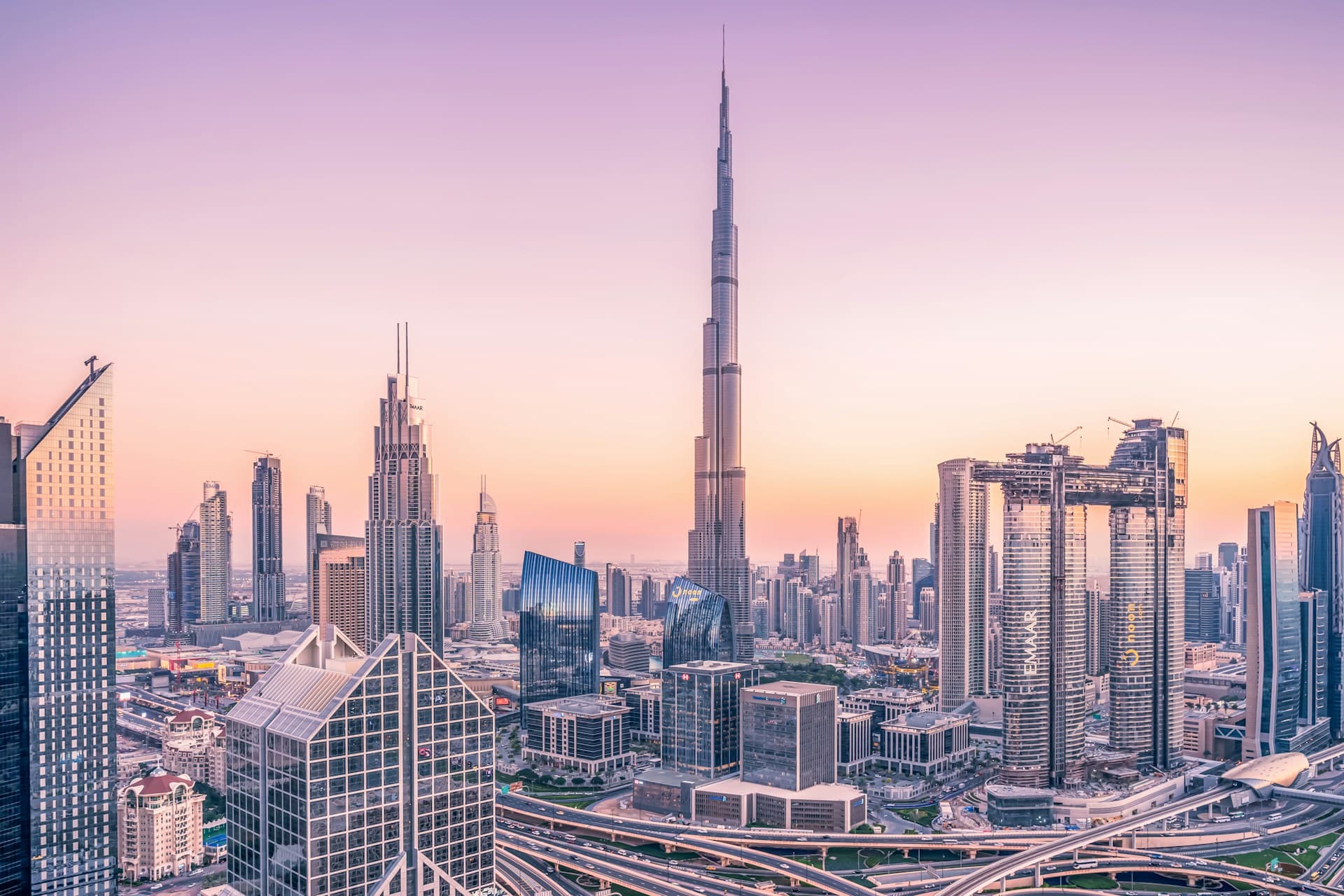
Dubai works as two cities layered on top of each other. There's the headline Dubai of the Burj Khalifa, the Palm, and the shopping malls — the city of records and skyline. And there's the older Dubai of the Creek, the spice and gold souks, and the Bedouin desert that surrounds it on three sides. A good trip spans both.
What makes Dubai unusual as a destination is how transit-friendly it is. The driverless metro is clean, cheap, and air-conditioned. Taxis and Careem (the local Uber) are inexpensive. English is spoken everywhere. You can land in the morning, see the Burj Khalifa in the afternoon, do a desert safari that evening, and not feel like you've done anything heroic.
Below are ten things to do in Dubai, ordered roughly by priority for first-time visitors. Each entry tells you what it's actually like, what it costs, how long to plan, and whether a guided tour is worth booking.
Planning Your Visit
A few practical things to know before you book anything:
Dubai basics:
- Best months: November through March. April and October are bearable. May through September is dangerously hot — 40°C+ daily, 90%+ humidity by the coast. If you visit in summer, every outdoor activity moves indoors.
- How long: 3 days minimum to see the highlights, 5 days is the sweet spot, a week if you want pool time and a day in Abu Dhabi.
- Getting around: the Dubai Metro Red and Green lines cover most tourist areas. A Nol Silver card is AED 25 (~$7) and works on metro, tram, and bus. Taxis and Careem fill in the gaps cheaply.
- Currency: UAE Dirham (AED). $1 ≈ AED 3.67 (the dirham is pegged to the dollar). Cards are accepted everywhere except the souks, where small dirham notes help.
- Dress code: smart casual everywhere modern (malls, restaurants, hotels). Cover shoulders and knees in mosques and traditional districts. Beach and pool wear is fine at beaches and pools — not on the metro.
- Tipping: 10–15% in restaurants if service isn't included, AED 5–10 for taxi drivers and bellhops. Generous but not mandatory.
One rule: book the Burj Khalifa observation deck and the desert safari before you arrive. Same-day tickets at the Burj are routinely sold out during peak hours, and the best safari operators fill weeks in advance during high season.
1. Burj Khalifa & Downtown Dubai
The Burj Khalifa is the tallest building in the world at 828 meters — over half a mile straight up. It opened in 2010 and is still the city's defining landmark. Three observation decks are open to the public: At the Top (level 124–125, the cheaper general-admission deck), At the Top SKY (level 148, the higher and pricier one with refreshments), and the Lounge (level 152–154, the priciest experience).
The view is genuinely staggering. From level 148 you can see across to the Persian Gulf, down the entire spine of Sheikh Zayed Road, and the geometry of the surrounding palm-frond islands. Sunset slots are the most coveted — you get the city in daylight, watch the sun drop into the Gulf, and see the lights come on across Downtown.
At a glance:
- Time on site: 2 hours including security and the lobby experience.
- Cost: AED 169 (~$46) for At the Top general admission off-peak; AED 229–379 (~$62–103) for sunset and SKY 148.
- Best timing: the sunset slot 60–90 minutes before sundown is the most magical and the hardest to book.
- Pre-book: tickets sell out 1–2 weeks ahead in high season. Same-day is gambling.
- Don't miss: the 30-second elevator ride is its own attraction — your ears will pop.
Tip: if the Burj Khalifa is sold out or out of budget, you get an excellent view of it for free from the bridge between Souk Al Bahar and the Dubai Mall — particularly during the nightly Dubai Fountain shows.
Klook
Burj Khalifa Tickets & Skip-the-Line Tours
Pre-booked tickets for the 124th, 148th, and Lounge floors, plus combo tickets with the Dubai Aquarium and Sky Views.
2. The Dubai Mall & Dubai Fountain
The Dubai Mall is one of the largest in the world by floor area — 1,200+ stores, an Olympic-size ice rink, an aquarium with a 10-meter underwater tunnel, a VR park, a digital art museum (teamLab Phenomena, opened 2025), and the launchpad for the nightly Dubai Fountain show. Even if shopping isn't your thing, you'll likely end up here at least twice during a Dubai trip.
The Dubai Fountain runs every 30 minutes from 6 PM to 11 PM outside the mall, choreographed to a rotating playlist of Arabic, pop, and classical tracks. It's free and the best night viewing position is the Souk Al Bahar bridge — book a window table at one of the Souk Al Bahar restaurants for a guaranteed view with dinner.
At a glance:
- Time on site: a full afternoon if you do the aquarium and an evening fountain show; less if you're just stopping in.
- Cost: free to enter. Aquarium and Underwater Zoo: AED 199 (~$54). teamLab Phenomena: AED 199 (~$54). Sky Views observation deck: AED 100 (~$27).
- Best time: weekday afternoons are quietest. Friday and Saturday evenings are gridlocked.
- Free attractions: the Dubai Fountain, the lobby aquarium tunnel (the inside-the-tank tour costs extra), the Souk and the dinosaur skeleton on level 2.
- Skip if pressed: the indoor theme park and ski slope. Both are fine but they're not why you came to Dubai.
Tip:the metro stop is "Burj Khalifa/Dubai Mall" on the Red Line, but it's a 15-minute air-conditioned bridge walk from the station to the actual mall. Allow extra time, and consider a taxi if you're running tight on a sunset Burj Khalifa slot.
3. Old Dubai & the Souks
Most visitors miss this and shouldn't. Old Dubai — the neighborhoods of Bur Dubai and Deira on either side of the Creek — is what the city was before the oil. The Al Fahidi Historical District (also called Bastakiya) is a maze of wind-tower houses from the 1890s, now restored as galleries, cafés, and the small but excellent Dubai Museum. The Sheikh Mohammed Centre for Cultural Understanding here runs cultural tours and traditional Emirati lunches that are some of the best cultural value in the city.
Across the Creek by abra (an old wooden water taxi — AED 1, about 25 cents), you reach Deira and the Spice and Gold Souks. The Gold Souk is exactly what it sounds like: 300+ gold retailers in a covered alley, with the highest concentration of bullion outside India. The Spice Souk smells like cardamom and saffron and is what you imagine a Middle Eastern market should look like. Bargain hard at both.
At a glance:
- Time on site: a full half-day for Al Fahidi + Creek crossing + Spice & Gold Souks.
- Cost: practically nothing. Abra crossing AED 1, Dubai Museum AED 3, food and souvenirs as you go.
- Best time: late afternoon into evening, especially November–March. The souks come alive after sunset.
- Don't miss: an Emirati lunch at the SMCCU in Bastakiya — fixed-price, family-style, and includes a Q&A with a local cultural ambassador.
- Bargaining: opening prices in the Gold Souk are 30–40% above what you'll pay; in the Spice Souk, 50% above. Walking away gets the real price.
Tip:Old Dubai is the best place in the city to take a guided walking tour. Without context, the souks are interesting; with a local guide, they're a lesson in trade routes that go back 800 years.
GetYourGuide
Old Dubai Walking Tours & Cultural Experiences
Guided tours of Al Fahidi, the souks, and the Creek — plus Emirati cooking classes and abra cruises.
4. Desert Safari
The desert is half the reason to come to Dubai. A standard evening safari is roughly six hours: a 4x4 picks you up from your hotel, drives 45 minutes into the Dubai Desert Conservation Reserve, lets some air out of the tires, and then spends 30 minutes "dune bashing" — sliding down sand slopes at angles that feel illegal. Then a Bedouin-style camp with camels, sandboarding, henna, falconry demos, and a buffet dinner under the stars.
Two things to know. First, premium operators (Platinum Heritage is the gold standard) use vintage Land Rovers, run smaller groups, go to the protected reserve, and skip the tackier stuff. Budget operators ($50–60/person) cram you into a 6-seater Land Cruiser convoy, drive in non-protected dunes closer to the city, and the "Bedouin camp" is a tourist factory. Pay the extra. Second, evening safaris are more popular but morning safaris are cheaper, cooler, and better for photos — the dunes glow at sunrise.
At a glance:
- Time on site: 6 hours total for evening safaris (3 PM pickup, 9 PM return); 4 hours for morning safaris.
- Cost: $50–80/person for budget group safaris; $200–400/person for premium small-group experiences (Platinum Heritage, Royal Shaheen).
- Best for: every visitor. This is the single most universally recommended Dubai experience.
- Skip if: you have a serious bad back. The dune bashing is rougher than you expect.
- Pro move: an overnight desert camp on the second night of a longer safari trip — far better star-gazing than a day-only camp.
Viator
Dubai Desert Safari Tours
Evening, morning, and overnight desert experiences — from budget group tours to private vintage Land Rover trips.
5. Palm Jumeirah & Atlantis
Palm Jumeirah is the man-made palm-shaped island visible from space — a $12 billion engineering project completed in 2007. The trunk is lined with high-end residences and hotels, the fronds are luxury villas, and the crescent-shaped breakwater holds Atlantis the Palm at the apex. The Palm Monorail runs the length of the trunk, but the views are best from the ground and from the View at the Palm observation deck (240 m up at the top of the Palm Tower).
Atlantis the Palm is worth a few hours even if you're not staying there. Aquaventure Waterpark is one of the largest in the world and is universally rated as the best in Dubai. The Lost Chambers Aquarium — sharks, rays, and a walk-through tunnel designed to feel like an underwater Atlantean ruin — is separate ticketing but combined entry passes save money.
At a glance:
- Time on site: half a day for the Palm itself; a full day if you do Aquaventure properly.
- Cost: View at the Palm AED 100 (~$27). Aquaventure Waterpark AED 365–425 (~$99–116). Lost Chambers AED 165 (~$45).
- Best time: weekday mornings at Aquaventure, sunset at the View at the Palm.
- Don't miss: a sundowner at one of the Atlantis bars facing the open Gulf — among the best sunset views in the city.
- Skip if pressed: the Palm Monorail. It's slow, expensive, and the Metro/tram covers most of the same ground.
6. Dubai Marina & JBR
Dubai Marina is the city's waterfront district — a 3 km artificial canal lined with skyscrapers, restaurants, and a continuous walking promenade. It's the closest thing Dubai has to a European city center: walkable, mixed-use, and buzzing in the evenings. The view from the Marina Walk is arguably the most photogenic in the city — a forest of supertall residential towers reflected in the water.
Jumeirah Beach Residence (JBR) sits at the seaward end of the Marina, a stretch of public beach with a buzzing pedestrian strip called The Walk. This is where you go for a long beach day, paragliding, kayak rentals, and the cleanest swimming on the Dubai mainland. Bluewaters Island, connected by footbridge, holds Ain Dubai — at 250 m, the world's largest observation wheel, though its operating schedule has been inconsistent.
At a glance:
- Time on site: a half-day for the Marina walk and JBR beach; a full day if you add a yacht cruise or Ain Dubai.
- Cost: free to walk and use the beach. Marina yacht cruises (90 minutes) start AED 200–300 (~$54–82). Skydive Dubai over the Palm: AED 2,499 (~$680) — the most expensive thing on this list and worth every dirham.
- Best time: late afternoon for the walk, sunset for the marina cruise, evening for The Walk at JBR.
- Tram: the Dubai Tram loops the Marina and connects to the Metro at Dubai Marina station. Free with the Nol Silver card.
- Pro move: book a sunset dhow dinner cruise — quieter than a yacht and a fraction of the cost.
7. Museum of the Future
The Museum of the Future opened in 2022 and immediately became one of the most photographed buildings in the world — a 77 m steel torus wrapped in Arabic calligraphy that frames sky. It floats above Sheikh Zayed Road on a green mound, and it's the rare modern Dubai building that holds up at every angle you approach it from.
The interior is a curated, technology-forward exhibition experience — visitors take an elevator to the top and walk down through five floors of immersive installations covering space exploration, climate, and future-of-humanity themes. It's closer to a theme park than a museum, with a strong Disney aesthetic. Worth seeing once for the architecture alone.
At a glance:
- Time on site: 2–3 hours including all five floors.
- Cost: AED 149 (~$40).
- Pre-book: timed-entry slots, frequently sell out 5–7 days in advance.
- Don't miss: the calligraphy on the facade is real Arabic poetry by Sheikh Mohammed bin Rashid Al Maktoum, the ruler of Dubai.
- Photo tip: the best exterior shots are from the Emirates Towers metro station footbridge.
8. The Dubai Frame
The Dubai Frame is a 150 m gold rectangular frame straddling Zabeel Park — designed so that looking through it from one side gives you a view of Old Dubai (Deira and the Creek) and the other side shows the modern skyline of Sheikh Zayed Road and the Burj Khalifa. The 93 m sky bridge between the two towers has a 25-meter glass floor in the middle that turns opaque to clear as you walk across it.
It's one of the cheaper observation experiences in Dubai and works as a quick 90-minute stop. The lower-floor Old Dubai exhibit is more interesting than its size suggests — a walk-through of the city's pre-oil history with sound, smell, and tactile elements.
At a glance:
- Time on site: 90 minutes.
- Cost: AED 50 (~$14) for adults — among the best-value attractions in the city.
- Best time: late afternoon, with both views in good light.
- Combine with: Dubai Garden Glow next door (an evening glow-in-the-dark park) or the Etihad Museum.
- Skip if: you've already done the Burj Khalifa and want a more substantial museum experience — try the Etihad Museum or the Museum of the Future instead.
9. Day Trip: Abu Dhabi
Abu Dhabi is 90 minutes south of Dubai by road and is the most worthwhile day trip in the UAE. The two unmissable stops are Sheikh Zayed Grand Mosque and the Louvre Abu Dhabi. The mosque — completed in 2007, blindingly white marble, 82 domes, capacity for 40,000 worshippers — is one of the most beautiful buildings I've seen in print. Entry is free; modest dress is required and abayas are provided to women without head coverings.
The Louvre Abu Dhabi, designed by Jean Nouvel, sits on Saadiyat Island under a 180-meter dome that filters light through 7,850 perforated stars. The collection is small but exceptional — works lent from the French Louvre and curated to tell a single global art history rather than a regional one. Add lunch on Saadiyat Beach and you've got a perfect day.
At a glance:
- Getting there: E101 bus from Ibn Battuta metro station (90 minutes, AED 25); private taxi or Careem (~$50–70 each way); guided day tour (AED 250–500 / $68–136 with both stops included).
- Time on site: 8 hours minimum to do both major sites without rushing.
- Cost: Sheikh Zayed Grand Mosque free; Louvre Abu Dhabi AED 63 (~$17); Yas Island parks (Ferrari World, Warner Bros.) AED 295–360 if you add them.
- Best for: every Dubai visitor. The mosque alone is worth the trip.
- Modesty: shoulders, knees, and hair covered for women at the mosque. Abayas are loaned at the entrance. Men in long trousers and sleeves.
Viator
Abu Dhabi Day Tours from Dubai
Full-day group and private tours of Sheikh Zayed Grand Mosque and the Louvre Abu Dhabi with hotel pickup.
10. Day Trip: Hatta Mountains
Hatta is a Dubai-administered mountain enclave 130 km east of the city, near the Oman border, and it's the antidote to skyline Dubai. The drive takes 90 minutes and the landscape changes completely — from dunes and date palms into the jagged Hajar Mountains. At the center is Hatta Dam, a turquoise reservoir framed by red mountains where you can rent kayaks, paddleboards, and pedal boats by the hour.
Around the dam: mountain biking trails (Hatta Mountain Bike Centre rents quality bikes), the Hatta Heritage Village (a restored traditional Emirati settlement), and the Hatta Wadi Hub adventure park. It's a half-day if you focus on the dam, a full day if you do mountain biking and the village too. An overnight at the Hatta JA Resort is the relaxed move if you have an extra day in the trip.
At a glance:
- Getting there: 90-minute drive on the E44, no border crossings now that the Oman bypass is complete. Self-drive is easiest; guided tours run AED 350–600 ($95–163).
- Time on site: 5 hours minimum for the dam and a meal; full day with mountain biking; overnight if you can.
- Cost: kayak/paddleboard rentals AED 60–120 ($16–33) per hour; mountain bike rental AED 100–200 ($27–54)/day.
- Best for: travelers who've already seen central Dubai and want a contrast; outdoor and active types.
- Best season: October–April. Summer days here are still hot but cooler than coastal Dubai.
Book a Guided Tour
For the desert safari and Abu Dhabi day trip, a tour is almost always the right call — transport is the bulk of the logistical pain, and the per-person economics work out close to a private Careem with the added benefit of a guide. For Old Dubai and cultural experiences, walking tours add real context the souks don't offer on their own.
For the Burj Khalifa, the Dubai Mall, the Marina, and most of the city's attractions, DIY by metro and Careem is cheaper and faster than any tour. Pre-book skip-the-line tickets where they exist (Burj Khalifa, Museum of the Future, Aquaventure) and you'll save 30+ minutes per attraction.
Staying Connected in Dubai
The UAE has some of the most expensive international roaming rates in the world — the country isn't in any major roaming alliance, and US carriers like Verizon and AT&T charge $12/day under their international day-pass plans. Over a 5-day Dubai trip that's $60 for data you can buy for a fraction of the cost as an eSIM.
You'll hear about "free SIMs at Dubai airport" — Du and Etisalat (the two UAE carriers) hand them out at arrivals. The catch: they require passport registration, include only a few hundred MB of data, and the upsells run to AED 100–200 ($27–54) for a useful data top-up. A travel eSIM activated before you fly is faster, easier, and cheaper.
Coverage in Dubai is excellent on both Du and Etisalat networks — 5G in the city, 4G in the desert reserves, and even at the top of Hatta. You'll want reliable data for Careem, Google Maps, ticket QR codes at the Burj Khalifa and Museum of the Future, and translation apps in the souks.
Compare eSIM Plans for the UAE
We've compared plans from Airalo, Holafly, Saily, and more — find the best data plan for your Dubai trip.
Compare UAE eSIM PlansFrequently Asked Questions
▶How many days do you need in Dubai?
Three full days covers the unmissables: Burj Khalifa and Downtown, a desert safari, and Old Dubai with the souks. Five days lets you add Palm Jumeirah, Dubai Marina, and a full Abu Dhabi day trip without rushing. Beyond a week and you're into beach/pool relaxation territory — which is fine, but the city itself doesn't need 10 days of sightseeing.
▶What is the best time to visit Dubai?
November through March is the sweet spot — daytime highs of 24–28°C, low humidity, and outdoor everything is enjoyable. December and January are peak season (and peak prices). April and October are shoulder months: hot but bearable. May through September is brutal — daily highs of 40–45°C and humidity that makes outdoor walking miserable. Hotel prices in summer are 50–70% lower if you can tolerate the heat.
▶Is alcohol allowed in Dubai?
Yes, but with rules. Alcohol is served in licensed hotel restaurants, bars, and clubs — almost every international hotel has at least one. You can drink legally if you're 21 or over. Public drunkenness is illegal and prosecuted, and you can't buy alcohol in supermarkets or convenience stores (residents need a license; tourists can buy at duty-free on arrival). During Ramadan, alcohol service is restricted in many venues during daylight hours.
▶Do I need a SIM card or eSIM in Dubai?
Yes — and an eSIM is the easiest option by far. UAE roaming charges from US carriers run about $12/day on Verizon or AT&T, and rental WiFi devices are an awkward extra device to carry. The 'free SIM at the airport' is a real promotion (Du and Etisalat hand them out at arrivals), but they require passport registration, only include a small data allowance, and the upsells get expensive fast. A travel eSIM activated before you fly starts at $3.49 for 1 GB over a week and works the moment you land.
▶What should I wear in Dubai?
Dubai is more relaxed than its reputation suggests. In hotels, malls, restaurants, beaches, and tourist areas, normal Western clothing is fine — shorts, sundresses, swimwear at pools and beaches. The dress code tightens in three places: religious sites (shoulders and knees covered, women cover their hair at mosques like Sheikh Zayed Grand Mosque), traditional souks (modest clothing shows respect even though it's not enforced), and government buildings. Avoid anything overly revealing in public for comfort, not legality.
▶Is Dubai safe for tourists?
Dubai is one of the safest major cities in the world for tourists. Violent crime is extremely rare, petty theft is uncommon, and the metro and public spaces feel safe at all hours. The bigger risks for visitors are cultural — public displays of affection beyond hand-holding can attract police attention, taking photos of people without permission is frowned upon (especially of local women), and any drug offense, including residue on luggage, is treated extremely seriously.
▶Do I need a visa for Dubai?
US, UK, EU, Australian, Canadian, and most Western passport holders get a free 30-day visa on arrival, extendable once for another 30 days. Indian passport holders with a valid US visa or UK/EU/Schengen residency also get visa on arrival. Other nationalities need to apply for an e-visa in advance through the GDRFA portal or via Emirates/Etihad if booking with them. Always check the official UAE government website (icp.gov.ae) for the most current rules.
▶How much does a trip to Dubai cost?
Budget travelers can do Dubai on $100–150/day (hostel or 3-star hotel, metro and bus, mall food courts, free attractions like the souks and beaches). Mid-range runs $250–400/day (4-star hotel, mix of taxis and metro, sit-down restaurants, one paid attraction per day, a desert safari). Luxury starts at $600/day and has no ceiling — Atlantis or Burj Al Arab rooms are $800–2,500/night, and fine dining easily hits $200/person.