Disclosure: This guide contains affiliate links. If you purchase through our links, we may earn a small commission at no extra cost to you.
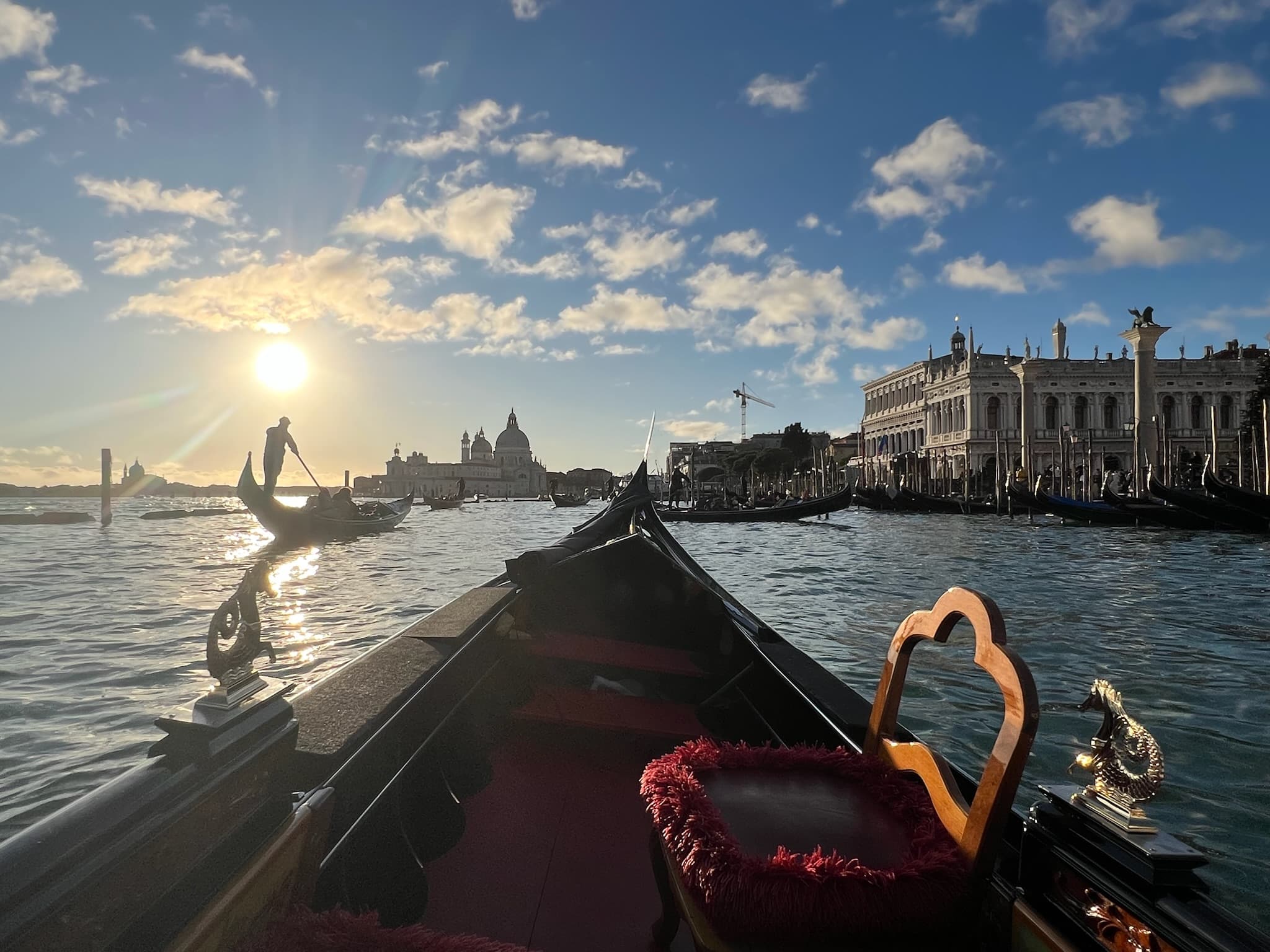
Venice is unlike any city on Earth. Built on 118 islands connected by 400 bridges, it's a place where narrow alleyways open suddenly onto sunlit campos, where the sound of gondoliers echoes off ancient stone, and where every corner seems designed to stop you in your tracks.
My wife and I spent two nights in Venice in January 2025, staying at the AC Hotel Venezia. We arrived by Trenitalia from Florence — the train pulls directly into Venezia Santa Lucia station on the Grand Canal, which is one of the great arrival moments in travel. What follows is what we actually did, what we wish we'd done, and the practical tips we wish we'd known.
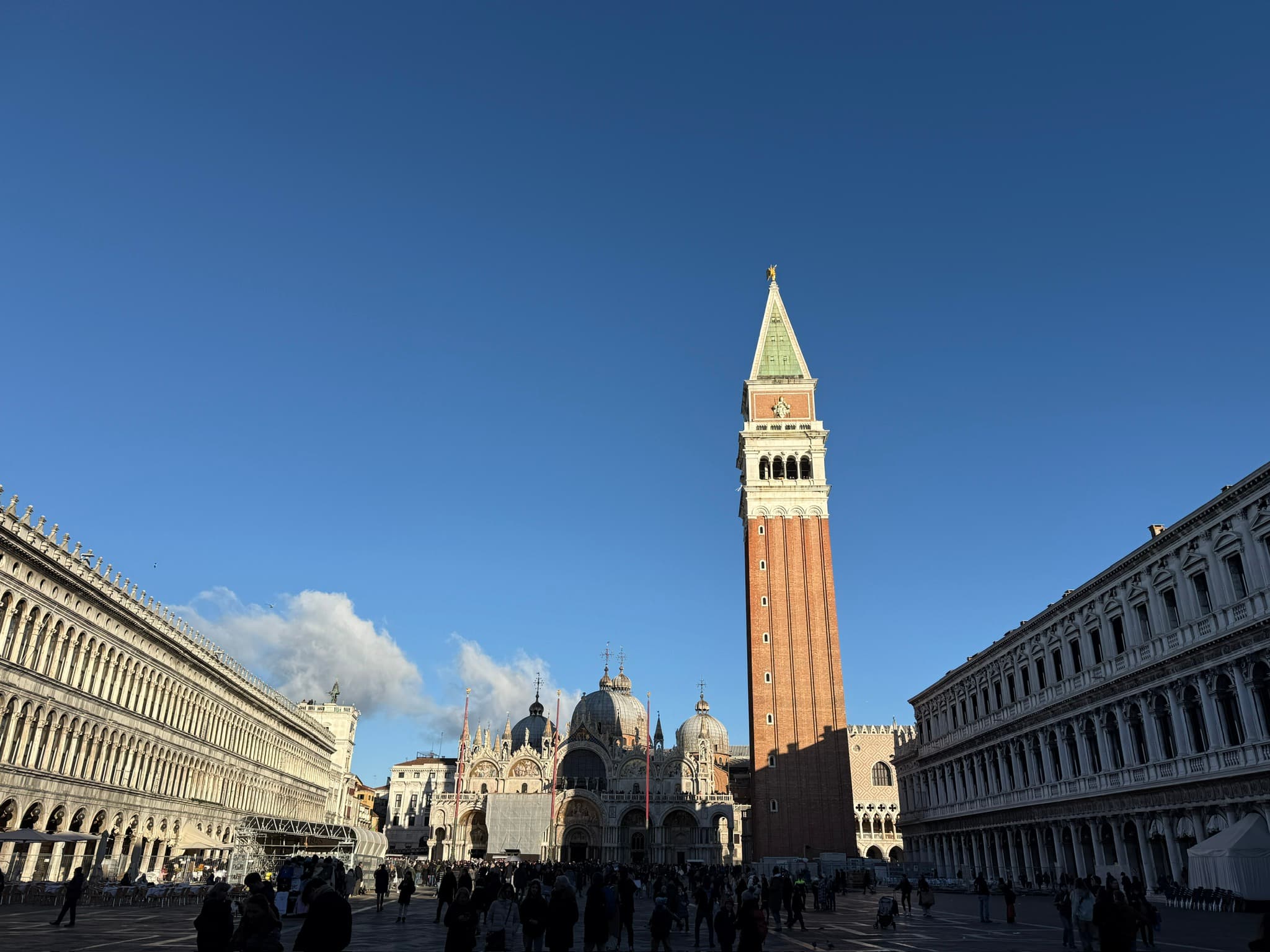
1. Piazza San Marco — The Heart of Venice
Piazza San Marco is the only square in Venice officially called a "piazza" — everything else is a campo or a campiello. It's the social and spiritual center of the city, and even after centuries of visitors, it manages to feel genuinely grand.
We visited in January, which meant the square was draped in morning fog with almost no tourists. It was one of those unexpectedly perfect travel moments — Basilica di San Marco glowing gold in the mist, pigeons shuffling across the empty stones. Worth every freezing minute.
What to see around the Piazza:
- Basilica di San Marco — Venice's cathedral, decorated with Byzantine mosaics and topped by five domes. Entry to the Basilica is free; the Pala d'Oro altarpiece costs a small extra fee. Skip the line by booking entry online.
- Campanile di San Marco — the 99-meter bell tower has been standing (rebuilt after its 1902 collapse) since the Renaissance. Elevator to the top for panoramic views of the lagoon and rooftops.
- Doge's Palace — directly attached to the Basilica. See the dedicated section below.
- Museo Correr — fills the rest of the piazza's arcade buildings with Venetian history, maps, and art.
- Caffè Florian — one of the oldest cafés in the world (1720). A coffee here will cost €12–20 with the live music surcharge, but it's worth it once.
Tip: Visit early morning (before 9 AM) or after dinner to experience the Piazza without the tour group crowds. In summer, this square can hold tens of thousands of people at peak hours.
2. Doge's Palace (Palazzo Ducale)
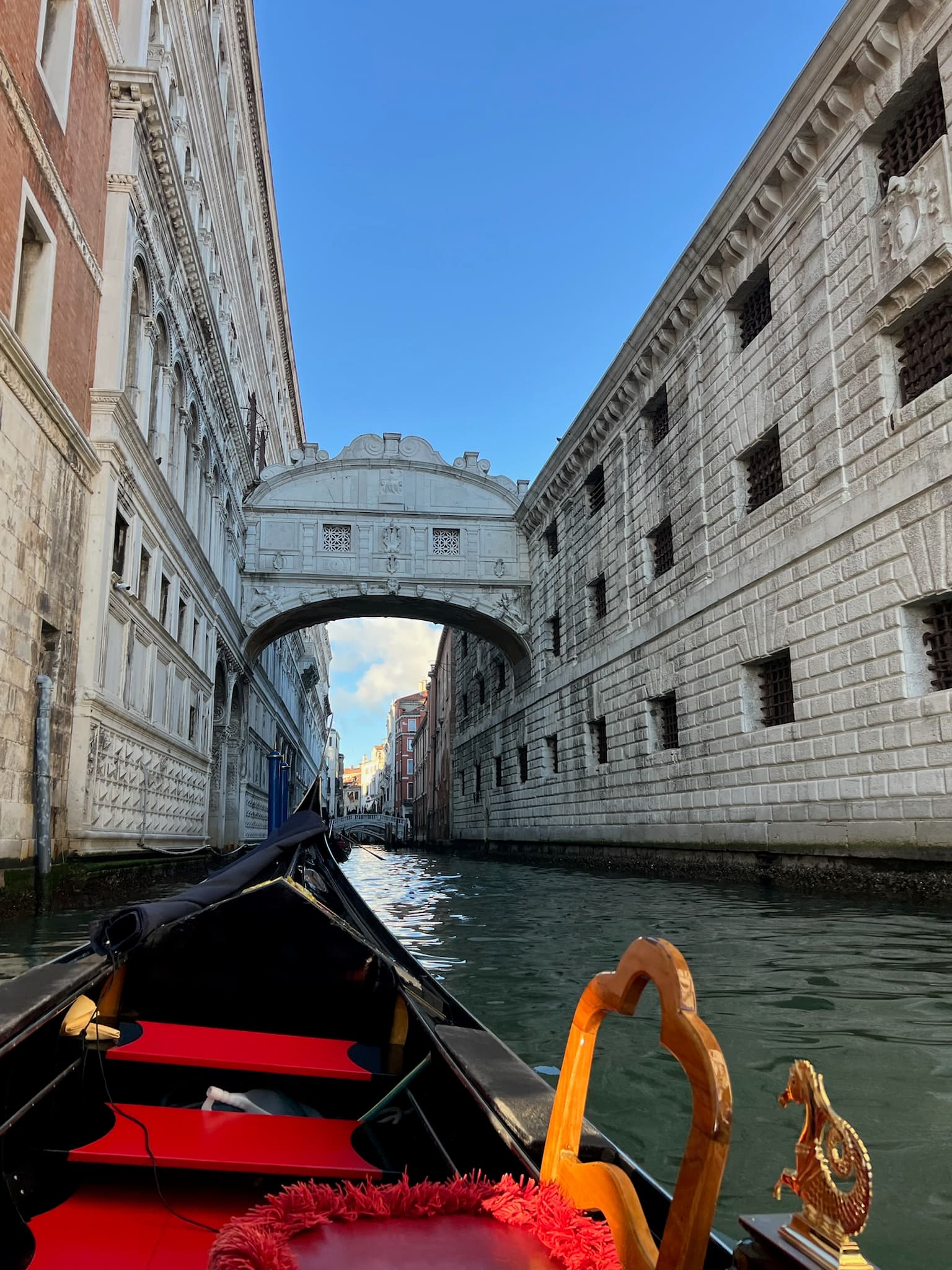
The Doge's Palace was the political center of the Venetian Republic for almost a millennium. It's the most impressive Gothic building I've seen — an architectural contradiction of heavy stone resting on a delicate lace-like arcade of marble columns.
We spent about two hours inside. The interior rooms are enormous and covered floor-to-ceiling with paintings by Tintoretto, Veronese, and Titian — the largest oil painting in the world (Tintoretto's "Paradise") covers the entire wall of the Grand Council Chamber.
Don't miss inside:
- The Grand Council Chamber — the largest room in the palace, with Tintoretto's Paradise covering the far wall.
- The Bridge of Sighs (Ponte dei Sospiri) — connect the palace to the prisons. You can walk through the covered bridge that condemned prisoners crossed for the last time.
- The Doge's Apartments — opulent private rooms that show the wealth of the republic at its peak.
- The prisons — the dark, low-ceilinged cells are a dramatic contrast to the palace's gilt halls above.
Practical:Book tickets online in advance — the standard museum pass is around €30 and includes the palace and Museo Correr. The Secret Itinerary tour (€30 extra) takes you into hidden rooms including Casanova's prison cell, but must be booked separately.
3. Gondola Ride & the Grand Canal
Yes, the gondola is touristy. Yes, it costs €80–90 for a standard 30–40 minute ride (fixed official price, more in the evening). Yes, you should do it anyway.
We did a gondola ride on our first afternoon, gliding through narrow side canals with walls rising straight up from the water on both sides. The gondolier navigated corners and passages that seemed impossibly tight. It's a perspective of Venice you simply can't get on foot, and the 40 minutes felt entirely worth it.
Tips for the gondola:
- Official price is €80 for up to 6 people (30–40 min), rising to €100+ after 7 PM. Never pay more than the official rate.
- Book at a gondola station rather than with touts approaching you on the street.
- The side canals (rii) are far more interesting than the Grand Canal — ask your gondolier for a route through the quieter sestieri.
- Couples share gondolas with strangers — if you want privacy, you'll pay for the whole gondola (same price split 1 way instead of 6).
The Grand Canal itself — Venice's main artery — is best seen from the water. Take vaporetto line 1 (the slow boat) from Piazzale Roma to San Marco and sit on the front or side deck. It takes about 45 minutes and passes palaces, churches, and the Rialto Bridge for just €9.50 a ticket.
The Best Thing to Do in Venice: Get Lost
Genuinely — put your phone in your pocket and walk. Venice is the one city in the world where getting lost is the activity. There are no cars to worry about, no dangerous intersections, and nowhere you can go that doesn't eventually lead back to the water. What you find around corners in Venice is the actual experience of Venice: a small campo with a single café and three locals having an argument, a Gothic doorway covered in moss, a canal so narrow you could almost jump it.
Some of the best moments from our January visit happened this way — wandering without a plan until something interesting appeared. Two of those moments involved perfume.
In Europe, "perfume" is gender-neutral — it's just fragrance, worn by men and women alike, without the US distinction between cologne and perfume. And Venice happens to have two extraordinary places to discover this.
The Merchant of Venice — Flagship Store
This Venetian perfume house draws on the city's history as a spice and trade hub — many of their fragrances reference actual Venetian trade routes and ingredients. The flagship store is worth seeking out specifically: the staff are genuinely knowledgeable and enthusiastic rather than salesy, and they take time to help you understand what you're smelling and why. We both found scents we loved, and the experience of being guided through a fragrance collection by someone who clearly cares about it was one of the highlights of the trip.
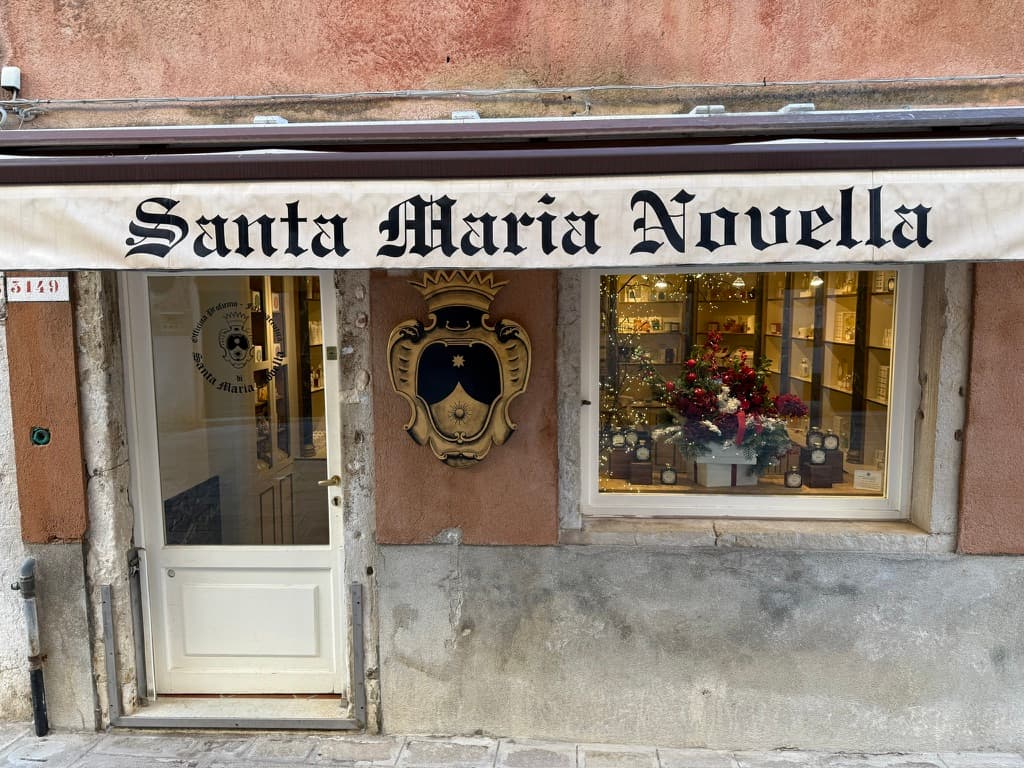
Officina Profumo-Farmaceutica di Santa Maria Novella
One of the oldest pharmacies in the world, founded by Dominican friars in Florence in 1612. Their Venice outpost carries the full range of fragrances, room scents, soaps, and skincare that have been made (largely to the same recipes) for four centuries. The shop itself is beautiful — wood paneling, glass cases, the smell of the place before you even approach the counter. Again, the staff were exceptional: patient, knowledgeable, and clearly proud of what they sell. Walk in with curiosity and you'll walk out with something you'll use for years.
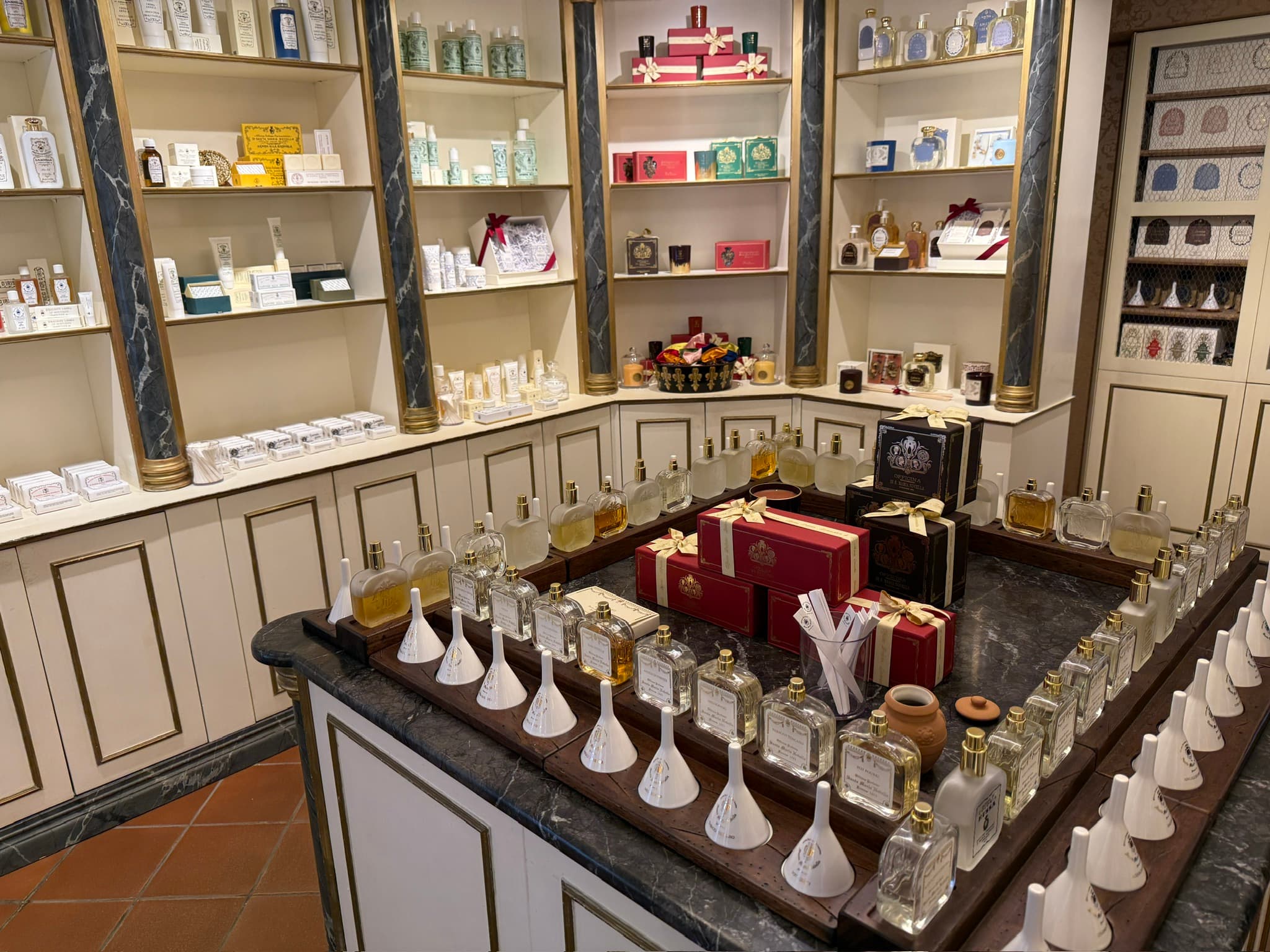
The broader point: Venice rewards people who slow down. The tourists who check Piazza San Marco off a list and leave by 3 PM miss most of it. The tourists who stay, wander, follow a street for no reason, duck into a shop that looks interesting — they get the city. Build time into your itinerary to do nothing in particular.
4. Rialto Bridge & the Market
The Ponte di Rialto is Venice's most famous bridge — a stone arch completed in 1591 that spans the Grand Canal at its narrowest point. It's worth crossing slowly and pausing on the two side lookout points for unobstructed views up and down the canal.
Around the Rialto:
- Rialto Market (Mercato di Rialto) — operating since 1097, this fresh produce and fish market is one of the best in Italy. Arrive before 11 AM to see it at full swing. The fish section (pescheria) is especially extraordinary.
- Restaurants around the market — the streets near the Rialto on the San Polo side have some of the city's best bacari (Venetian wine bars) for cicchetti at lunch.
- Fondaco dei Tedeschi — a luxury department store with a free rooftop terrace (reservation required) offering great views of the Grand Canal.
5. Day Trips to Murano & Burano
The lagoon islands around Venice are easy half-day additions and feel completely different from the main island. Both are reachable by vaporetto from Fondamente Nove in about 45 minutes.
Murano
The glassblowing island. Venetian glassmakers were relocated here in 1291 (fire risk to the city). Watch a glassblowing demonstration, browse the showrooms, and visit the Glass Museum. The island is surprisingly quieter than Venice itself — a nice contrast.
Burano
The lacemaking island, famous for its brightly painted fishermen's houses. Practically every photo looks like a postcard. Plan 2–3 hours to wander the streets and have a risotto di gò (a local goby fish dish) at one of the canal-side restaurants.
Torcello
The oldest settlement in the lagoon — once more populated than Venice itself, now largely abandoned. The 7th-century cathedral has some of the oldest and finest Byzantine mosaics in Italy. Combine it with Burano on the same trip.
6. Gallerie dell'Accademia
If you have any interest in Venetian painting, the Accademia is unmissable. It contains the finest collection of Venetian art in the world — Giovanni Bellini, Carpaccio, Giorgione, Titian, Tintoretto, and Veronese, spanning from the 14th to the 18th century.
Allow 2–3 hours and book tickets online (around €12). The museum sits at the southern end of the Accademia Bridge in Dorsoduro — one of the least crowded and most beautiful parts of Venice to explore before or after your visit.
7. Dorsoduro & the Peggy Guggenheim Collection
Dorsoduro is the neighborhood that feels most like a real city — university students, local bars, and a quieter pace than San Marco. It's my favorite part of Venice to simply wander with no particular destination.
Highlights in Dorsoduro:
- Peggy Guggenheim Collection — a world-class modern art museum in Guggenheim's former palazzo on the Grand Canal. Picasso, Dalí, Kandinsky, Pollock, and Ernst among many others. One of the best museum experiences in Italy.
- Campo Santa Margherita — the liveliest square in Venice, ringed with cafés and bars popular with students. Good spot for an aperitivo.
- Punta della Dogana — a contemporary art museum at the tip of Dorsoduro with rotating exhibitions and extraordinary views across to San Marco.
- La Zattere — the broad waterfront promenade on the south side of Dorsoduro, perfect for an evening walk with views across to Giudecca.
Food & Drink in Venice
Venice has a reputation for overpriced, mediocre tourist food — and it's partly deserved. The restaurants in the immediate vicinity of San Marco are generally to be avoided. But venture even one or two bridges away and you'll find excellent food.
Cicchetti (Venetian tapas)
The local way to eat. Bacari are small bars serving cicchetti — bite-sized snacks on bread like baccalà mantecato (whipped salt cod), sarde in saor (sweet-sour sardines), and meatballs. Pair with a small glass of wine (un'ombra). Budget €10–15 for a satisfying lunch standing at the bar.
Sarde in saor
One of Venice's signature dishes — sardines marinated in onions, vinegar, pine nuts, and raisins. The recipe dates back to medieval times when sailors preserved fish for long voyages. Try it at almost any bacaro in the Rialto neighborhood.
Seafood pasta
Spaghetti alle vongole (clams), risotto al nero di seppia (squid ink risotto), and bigoli in salsa (thick pasta with anchovy and onion sauce) are all Venetian classics. Avoid any restaurant advertising a fixed-price tourist menu near San Marco.
Spritz Veneziano
Venice's iconic aperitivo — prosecco with a splash of Aperol or Select (the bitter local liqueur that's more complex than Aperol) and a green olive. Standing at a bar costs €2–3. Sitting outdoors near San Marco costs €12+.
Getting Around Venice
Venice has no cars, no bikes, and no buses. Everything is on foot or on the water.
Walking
The best and most rewarding way to get around. Venice is only 4 km from end to end — you can walk from Santa Lucia station to Piazza San Marco in 30-40 minutes. Getting intentionally lost in the alleyways is one of the best things you can do here.
Vaporetto (water bus)
The public transit of Venice. A single ride is €9.50 (expensive, but unavoidable). A 24-hour pass (€25) or 48-hour pass (€35) is worth it if you plan to use the vaporetto more than twice a day. Line 1 runs the full length of the Grand Canal; Line 2 is faster with fewer stops.
Water taxi
Shared water taxis (alilaguna) connect the airport to the city for around €15 per person. Private water taxis run €60–100 for airport transfers and more for other journeys. We took a private water taxi to Marco Polo Airport at 3:40 AM for a 6:20 AM flight — cost was around €90. Pre-book if you have an early departure.
Traghetto
A standing gondola that ferries people across the Grand Canal at several fixed crossing points. Costs just €2 and is one of the authentic local experiences left in Venice.
When to Visit Venice
Venice is crowded year-round, but the experience varies dramatically by season.
Winter (November–February)
Fewest tourists, lowest prices, and the most atmospheric version of the city — fog rolling across the lagoon, empty campi, and the occasional acqua alta flooding. Pack waterproof boots and warm layers. January and February are when Carnival begins. This is how I visited, and I'd recommend it.
Spring (March–May)
The shoulder season sweet spot. Weather is mild, tourist numbers are rising but not yet peak, and the city is at its most photogenic with soft light. Easter week is crowded.
Summer (June–August)
Peak season — hot, extremely crowded, and the most expensive. The city implements tourist access restrictions during the busiest weekends (a day visitor fee applies). Not the best time to visit unless you have no flexibility.
Autumn (September–October)
Another strong shoulder season. Temperatures are pleasant, the summer crowds thin out, and acqua alta season begins in October. Biennale years (even-numbered) bring major exhibitions through November.
Book a Guided Tour
Venice is one of those cities where a guide genuinely transforms the experience. Walking through Doge's Palace with someone explaining the political machinery, the trials, and the prisoners who crossed the Bridge of Sighs — you can't get that from a placard. A guide makes you feel like a VIP in a city that can otherwise feel overwhelming and impersonal.
The same goes for the Gallerie dell'Accademia and any of the smaller palazzos. Venice's history is dense and layered — the Byzantine, the Crusades, the trade empire, the fall. A good guide is the difference between seeing beautiful old things and actually understanding what you're standing in front of.
Staying Connected in Venice
Italy has solid 4G coverage, and Venice — despite its medieval street grid — has good signal throughout the main islands and lagoon. You'll want data for navigating the alleyways (offline maps are a must — the city is genuinely labyrinthine), checking vaporetto schedules, and looking up restaurant reviews before sitting down.
International roaming is expensive — Verizon TravelPass and AT&T International Day Pass run $12/day, which adds up fast on a week-long trip. A travel eSIM for Italy starts at $2.99 for 1 GB over 7 days and can be set up before you leave home.
Compare eSIM Plans for Italy
We've compared plans from Airalo, Holafly, Saily, and more — find the best data plan for your Italy trip.
Compare Italy eSIM PlansFrequently Asked Questions
▶How many days do you need in Venice?
Two full days is enough to cover the main highlights — Piazza San Marco, Doge's Palace, a gondola ride, and a wander through the neighborhoods. Three to four days lets you add Murano, Burano, and explore quieter sestieri like Cannaregio and Dorsoduro at a relaxed pace. If you're visiting for the Biennale or Carnival, add another day or two.
▶Is Venice expensive?
Venice is one of Italy's most expensive cities. A sit-down dinner in a restaurant near San Marco can cost €20–40 per person for pasta alone. You can manage costs by eating at bacari (Venetian wine bars) where cicchetti (small bites) start at €1–2 each, shopping at the Rialto Market for lunch ingredients, and getting your coffee standing at the bar (never sitting at an outdoor table near San Marco, where prices are tourist-inflated).
▶Is Venice worth visiting in winter?
Absolutely. January and February offer Venice at its most atmospheric — fewer tourists, lower hotel prices, and dramatic fog rolling across the lagoon. You'll share Piazza San Marco with locals rather than crowds. The main trade-off is cold, damp weather and the occasional acqua alta (high water flooding). Pack waterproof boots and layers.
▶How do you get around Venice?
Almost entirely on foot — Venice has no cars, buses, or bikes. For longer distances, the vaporetto (water bus) is the main public transport, costing €9.50 per ride or €25 for a 24-hour pass. Water taxis are fast but expensive (€60–100 for airport transfers). Gondolas are a tourist experience, not transportation — budget €80–90 for a standard 30-40 minute ride.
▶What is acqua alta and should I worry about it?
Acqua alta is seasonal flooding that occurs when high tides push water into Venice's streets and squares. It happens most often from October through January. The city sets up elevated wooden walkways (passerelle) in the worst-hit areas. Bring waterproof boots or pack rain boots — most souvenir shops sell cheap disposable overshoes. Check the city's tide forecast at comune.venezia.it for your travel dates.
▶How do you get from Florence to Venice by train?
Trenitalia's Frecciarossa high-speed trains run frequently between Florence Santa Maria Novella and Venice Santa Lucia. Journey time is roughly 2 hours, and tickets start around €20 booked in advance. The train terminates at Venezia Santa Lucia station, which sits directly on the Grand Canal — it's one of the most dramatic train arrivals in Europe.
▶Does my phone work in Venice?
Italy has solid 4G and growing 5G coverage across Venice and the surrounding lagoon islands. Your home carrier's roaming rates likely apply, but at $10–12/day those add up fast. A travel eSIM from providers like Airalo or Saily gives you data for the whole trip — 1 GB for a week in Italy starts at $2.99.